
I remember sitting in my armchair last November, staring at a pile of glossy brochures that promised “holistic rejuvenation” and “revolutionary healing journeys” after my hip replacement. It was all nonsense, the sort of expensive fluff you’d see in a high-end boutique in Salisbury rather than a real home. They make it sound like you can simply wish your way back to health with the right scented candle, but anyone who has actually dealt with the reality of how to recover from an operation knows that the truth is much more uncomfortable and unglamorous. It isn’t about finding your inner zen; it’s about the grit required to move when your body is telling you to stay perfectly still.
I’m not here to sell you a lifestyle or a miracle cure. What I can offer is the plain truth, gathered from my own slow trek back to the garden and a few long chats with the nurses at the local infirmary. I’ll be sharing the practical, no-nonsense steps that actually matter—from managing the small, daily frustrations to knowing when to push yourself and when to just sit tight. We’ll focus on what works in a real house, with real constraints, because recovery is a job that requires a steady hand and a bit of patience.
Table of Contents
Managing Post Surgical Pain Without Losing Your Footing
Now, don’t go thinking that once you’ve left the hospital, the hard part is over. It isn’t. There is a particular kind of frustration that comes when you want to be out in the garden, but your body has other ideas. Managing post-surgical pain isn’t about simply swallowing whatever the doctor handed you; it’s about finding a rhythm. If you take the medicine too late, you’re playing catch-up with the discomfort, and that’s a losing game. I’ve found it’s best to stay ahead of it, much like how you’d treat a damp patch in a cellar—don’t wait for the floor to rot before you act.
You also need to keep a sharp eye on the site itself. I’m talking about your stitches. While you’re focusing on wound care after surgery, look for anything that doesn’t sit right—redness that spreads or heat that feels out of place. Those are the early warning signs you shouldn’t ignore. It’s a bit like checking the mortar on an old wall; if you spot a crack early, you can fix it, but if you wait, the whole thing might come down.
The Practical Reality of Diligent Wound Care After Surgery
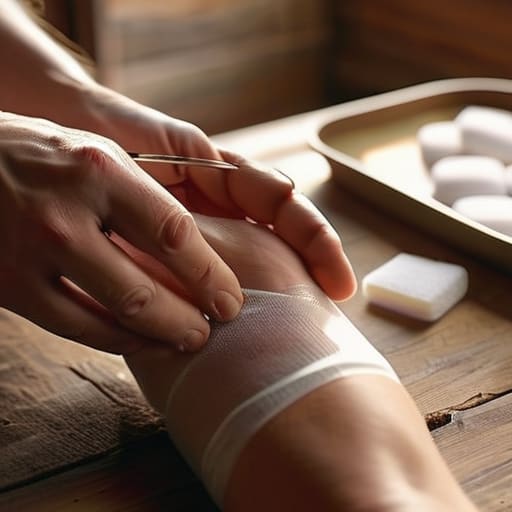
Now, let’s talk about the actual business of the incision itself. I remember a client of mine back in the nineties—a sturdy fellow who lived in a converted granary near Salisbury—who thought he could just slap a bit of plasters on it and get on with his life. He was wrong. Proper wound care after surgery isn’t about being precious; it’s about being methodical. You need to keep the area clean and dry, much like how you’d treat a damp patch in a lime-plastered wall. If you leave it to chance, you’re asking for trouble.
You must keep a sharp eye out for anything that doesn’t look right. I’m not talking about a bit of redness that fades by tea time, but rather the unmistakable signs of surgical infection: a sudden heat, a persistent throbbing, or any unpleasant discharge. If the skin around the site looks angry or feels like it’s pulsing, don’t wait for the next parish meeting to mention it; call your GP immediately. It is far better to be told you are being overly cautious than to find yourself dealing with a complication that keeps you in bed for an extra fortnight.
Five things I’ve learned about the long road back
- Don’t try to be a hero with the stairs. I once saw a lad try to rush up the steps at the Old Rectory—built around 1840, mind you, with those narrow, uneven treads—and he nearly ended up in the hallway. If you’ve had surgery, take the stairs one at a time, or better yet, wait until you don’t feel like you’re walking on a tilting deck.
- Keep a proper tally of your kit. When I was surveying old cottages, I always said a good job relies on having the right tools within reach. The same goes for your recovery; keep your water glass, your phone, and your prescribed tablets on the side table right next to your armchair so you aren’t reaching or stretching when you shouldn’t be.
- Listen to the house, and your body. Just as you can tell a damp wall is causing trouble by the smell in the hallway, your body will tell you when you’ve done too much. If you feel a throb or a sharp pull, that’s your signal to sit down. It’s not a sign of failure; it’s just basic maintenance.
- Get some decent air, but mind the weather. A bit of fresh air is good for the lungs, especially after being cooped up, but don’t go wandering out into a Hampshire gale if you’re feeling unsteady. A short walk to the end of the garden gate is plenty for the first week.
- Enlist a proper neighbour. We used to rely on the village network for everything, and it’s no different now. If someone offers to pick up your milk or take the bins out, let them. It’s much easier to let a friend help with the heavy lifting now than to end up back in the hospital because you were being stubborn.
Three things to keep in mind while you mend
Don’t try to rush the rebuild; much like a dry stone wall that’s settled poorly, if you try to force the pieces into place too quickly, the whole thing will just shift again when you least expect it.
Keep a close eye on the small details, because by the time a problem becomes loud enough to shout about, it’s usually much harder to fix than if you’d noticed the slight change in the weather early on.
Lean on the people around you for the heavy lifting, whether that’s someone bringing a loaf of bread or helping with the bins, because trying to do everything yourself is a quick way to end up back in the recovery room.
The pace of the mend
You can’t rush a structural repair, and you can’t rush a body either; if you try to hammer a new joist into place before the mortar has set, you’ll only end up with a mess that takes twice as long to fix.
Gordon Ellery
The long road back to the garden gate

If you take nothing else from this, remember that recovery isn’t a race to be won, but a series of small, measured steps. You have to stay on top of the pain so you can actually move, and you must treat that wound with the same meticulous care I’d give to a crumbling flint wall that needs setting. It is easy to get frustrated when you can’t quite manage the stairs or when the fatigue hits you like a sudden summer downpour, but those setbacks are often just part of the process. Listen to the professionals, keep your surroundings tidy, and don’t try to do a week’s worth of walking in a single afternoon just because you’re feeling a bit more spirited on a Tuesday.
There will be days when the progress feels as slow as a tractor on a narrow lane in mid-winter, but please, don’t lose heart. I’ve seen many a person go through this, and more often than not, the strength returns in ways you didn’t expect. You aren’t just mending a physical injury; you are rebuilding your independence, one quiet hour at a time. Be as patient with yourself as you would be with a neighbour in the same boat. Before you know it, you’ll be back on steady ground, perhaps with a slightly slower gait, but ready to enjoy the view once again.
Frequently Asked Questions
When is it actually time to stop resting and start moving around the house again?
The short answer is: sooner than you think, but much slower than you’d like. I’ve seen too many people treat recovery like a period of hibernation, but your muscles aren’t built for sitting in a recliner for a fortnight. Once the surgeon gives the nod, start with short, deliberate laps around the kitchen. It’s about building momentum, not sprinting. If you can manage a trip to the kettle without feeling like you’ve climbed Malvern Hills, you’re getting there.
How much of my usual diet should I be trying to get back to once the hospital food is out of the way?
Don’t go rushing back to a Sunday roast or a heavy curry the moment you’re home. I remember a neighbour, Arthur, who tried to tackle a full steak after his hip replacement; he spent more time in the bathroom than the garden. Start small. Think more like a light lunch at the village café—soups, toast, or steamed veg. It’s about rebuilding the foundation, stone by stone, rather than trying to erect the whole wall at once.
What are the real signs that a bit of swelling is normal and when it's something I need to call the doctor about?
Now, a bit of puffiness is expected; I’ve seen enough post-op swelling to know the body’s just reacting to the intrusion. If it’s just a bit tender and fades as you move more, you’re likely on the right track. But if the area turns a hot, angry red, or if the swelling starts climbing up a limb like a rising tide, don’t wait for the next parish meeting. Call the surgery immediately.