I was out by the old flint wall behind the rectory last Saturday—a fine bit of 19th-century masonry, though the mortar is perished in places—trying to reset a few loose stones. Halfway through, I felt that familiar, sharp twinge in my lower spine, the kind that makes you realise you aren’t twenty-five anymore. Now, you can spend a fortune on those fancy ergonomic chairs that look like they belong in a spaceship, or listen to some specialist in London tell you that you need a specialist mattress, but I’ve learned that most of that is just expensive nonsense. If you are looking for how to stop back pain, you won’t find the answer in a glossy brochure or a high-priced gadget; you’ll find it in the way you actually move when you’re doing the real work of living.
I’m not a doctor, mind you, but I have spent thirty years walking through draughty houses and bending over survey sites, and I know what works when the ache sets in. In this post, I’m going to share the practical, no-nonsense habits I’ve adopted to keep myself upright and moving. I’ll tell you what I do when I’ve been hunched over a desk or a garden bed, focusing on simple, honest adjustments that actually hold up when you’re out in the real world.
Table of Contents
- Muscle Strain Recovery Tips for When the Day Takes Its Toll
- Lumbar Spine Relief Techniques That Actually Work in Practice
- A few practical bits to keep the spine in proper alignment
- A few things to keep in mind
- ## A lesson from the stone walls
- A bit of common sense for the long haul
- Frequently Asked Questions
Muscle Strain Recovery Tips for When the Day Takes Its Toll

When you’ve spent the afternoon wrestling with a stubborn section of dry stone wall or even just sitting too long at the computer, that dull ache in the lower back is a familiar visitor. I’ve found that the best muscle strain recovery tips don’t involve anything fancy, just a bit of patience and heat. A hot water bottle tucked against the small of your back while you sit in your favourite armchair can do wonders for loosening those tight fibres. If the tightness feels particularly stubborn, I often find that gentle stretches for spinal decompression—like lying flat on a rug with a rolled-up towel under your lower back—can help create a bit of much-needed space between those vertebrae.
It isn’t just about what you do when you’re hurting, though; it’s about how you treat your body during the day. I’ve realised that if you don’t commit to some basic core strengthening for back support, your muscles eventually decide to go on strike. It doesn’t need to be a gym session; even a bit of steady walking along the parish paths helps keep the supporting muscles from seizing up.
Lumbar Spine Relief Techniques That Actually Work in Practice
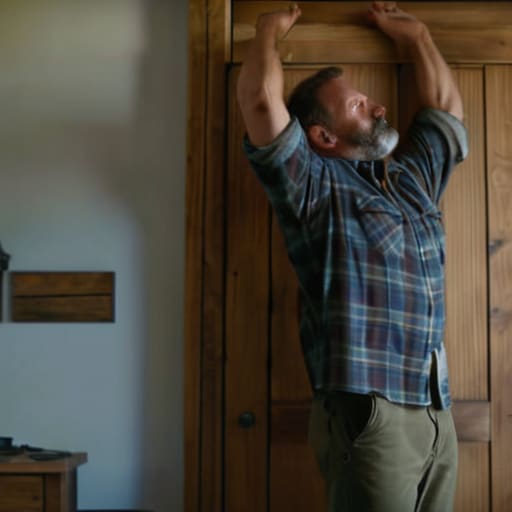
Now, I’m not a doctor, but I have spent enough time leaning over drafting tables and surveying damp foundations to know that when the lower back starts to protest, you can’t just ignore it. One of the most effective lumbar spine relief techniques I’ve found is simply creating space between those vertebrae. I often find that hanging heavy from a sturdy door frame—if you have one that’s built properly, mind you—can act as a decent set of stretches for spinal decompression. It’s not about pulling your weight, just letting gravity do the heavy lifting for a minute or two to take the pressure off.
Another thing I’ve learned from years of sitting in draughty parish council meetings is that your setup matters. If you’re working from a kitchen chair, you’re asking for trouble. A proper ergonomic workspace setup isn’t a luxury; it’s a necessity if you want to keep walking the lanes without a limp. I’ve found that placing a small, firm cushion at the base of the spine helps maintain that natural curve. It might look a bit odd, but it beats spending your evening lying flat on the floor with a hot water bottle.
A few practical bits to keep the spine in proper alignment
- Watch your footwear when you’re out on the lanes; I’ve seen too many people trekking through the village in thin-soled trainers that offer about as much support as a wet paper bag, and your lower back certainly feels the impact of every uneven paving stone.
- If you’re spending your afternoons hunched over a computer or a ledger, get yourself a proper chair with lumbar support—I’ve spent forty years valuing properties, and I can tell you that a cheap, flat kitchen chair is a one-way ticket to a stiff spine.
- Don’t go trying to be a hero when lifting heavy things, like those bags of compost or a heavy crate of milk; bend your knees and keep the weight close to your chest, otherwise, you’ll find yourself walking like a man three times your age by tea time.
- Keep moving, even if it’s just a short stroll down to the post office and back; the worst thing you can do for a dodgy back is to sit perfectly still in a wingback chair all day, as the muscles eventually just decide to lock up entirely.
- Pay attention to your sleeping position, perhaps trying a pillow between your knees if you’re a side sleeper; it sounds a bit fussy, but it keeps your hips from twisting and prevents that nasty morning ache that makes getting out of bed a chore.
A few things to keep in mind
Don’t wait until you’re hobbling to pay attention; if you feel a twinge while tending the garden or walking the dog, stop and stretch before it settles into a proper ache.
Movement is usually better than sitting still, but listen to your body—there is a fine line between a productive walk and pushing yourself into a flare-up.
Check your surroundings, whether it’s the height of your office chair or the way you’re loading the boot of the car, because the small, repetitive things are what usually do the most damage.
## A lesson from the stone walls
I’ve spent more hours than I care to admit wrestling with limestone and gritstone, and if there is one thing those old walls taught me, it’s that you can’t force a heavy load with sheer willpower; if you don’t respect your own frame and how you carry the weight, your back will eventually stage a protest you can’t ignore.
Gordon Ellery
A bit of common sense for the long haul

At the end of the day, managing your back isn’t about finding some miracle cure or a fancy piece of equipment that promises the moon. It’s about the small, consistent things—the way you sit when you’re checking the village news, the way you lift a heavy bag of compost from the garden shed, and knowing when to actually stop and stretch rather than pushing through the ache. We’ve looked at everything from simple muscle recovery to those specific lumbar movements that provide a bit of genuine relief. If you can get the basics of your posture and your movement right, you’ll find that most of those nagging pains start to lose their grip on your daily routine.
I’ve spent forty years looking at structures, from timber-framed cottages built in the 1600s to the more modern brickwork around the valley, and I can tell you that even the strongest buildings require a bit of regular maintenance to stay sound. Your body is much the same. You don’t wait for a roof to cave in before you patch a few tiles; you tend to the small things so the whole thing stays upright. Don’t let a bit of stiffness stop you from enjoying a walk down to the pub or a morning in the garden. Listen to your body, take it slow, and remember that consistency beats intensity every single time.
Frequently Asked Questions
Is it worth paying for a proper physiotherapist, or can I sort this out myself with a few stretches and a decent cushion?
Now, I’ve spent many an afternoon leaning over a damp stone wall, and I know the temptation to just buy a better cushion and hope for the best. If it’s a simple niggle from a long walk to the post office, a few stretches might do the trick. But if that ache is persistent, don’t dither. Pay for the physiotherapist. It’s cheaper than a lifetime of bad habits and a ruined spine.
When does a bit of a twinge in the lower back mean I should stop walking the dog and actually see a doctor?
Now, I’m a surveyor, not a doctor, but I know the difference between a house settling and a foundation cracking. If that twinge turns into a sharp, electric shock, or if you feel a numbness creeping down your leg into your foot, you stop walking immediately. If you find you’re losing strength or can’t control your bladder, don’t wait for the morning paper—get to A&E. Otherwise, if the pain keeps you awake at night, book an appointment.
Will changing my footwear make any difference, or am I just fighting a losing battle with my old boots?
I’ve spent thirty years walking uneven lanes and muddy tracks, and I can tell you: those old boots are likely part of the problem. If the soles are worn down on one side, your pelvis is tilting with every step. It’s like trying to level a house on a shifting foundation. You aren’t fighting a losing battle, but you are fighting your equipment. Get a pair with proper arch support; your lower back will thank you.