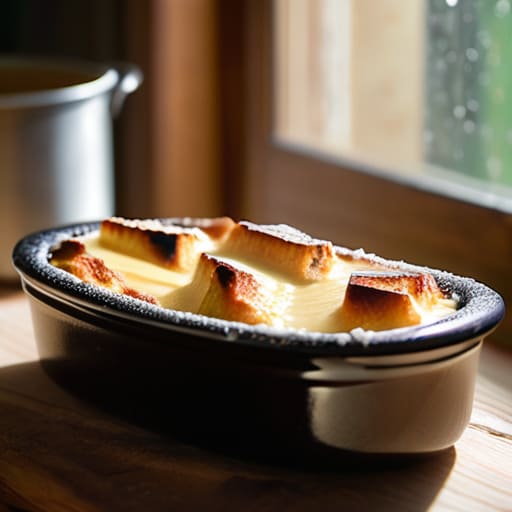
You don’t need a handful of expensive raisins or a dash of fancy vanilla bean paste to get this right; in fact, I’ve found that the more you fuss with the ingredients, the more you lose the point. People often ask me how to make bread and butter pudding that actually tastes like something, and they expect a list of gourmet additions, but the truth is far simpler. If you try to turn it into a complicated dessert, you’ve missed the mark entirely. It should be about the texture of the bread and the richness of the custard, nothing more and nothing less.
I’ve spent enough years sitting in drafty village halls and dining rooms across the county to know that a good pudding is about reliability. In this guide, I’m going to show you exactly how to make bread and butter pudding using nothing more than what you likely have in your pantry right now. I won’t be giving you any of that supermarket-style fluff; instead, I’ll provide the straightforward method I’ve used for decades. I’ll tell you which bread holds its shape and how to ensure your custard doesn’t end up as a thin, watery mess.
Table of Contents
- Recipe Instructions
- Finding the Best Bread for Pudding and Classic British Dessert Recipes
- Building a Creamy Custard Base for Easy Comfort Food Recipes
- A few small things that make a big difference
- A Few Final Thoughts Before You Head to the Oven
- The Secret in the Soak
- A Final Thought Before You Dig In
- Frequently Asked Questions
Recipe Details
Ingredients
- 6 slices of thick white bread
- 50g unsalted butter, softened
- 3 large eggs
- 300ml whole milk
- 50g caster sugar
- 1 tsp vanilla extract
- 30g raisins or sultanas
- 1 tsp ground cinnamon
Recipe Instructions
Step 1
First, you’ll need to get your hands on some decent bread. Don’t bother with those thin, pre-sliced loaves from the supermarket that have the consistency of a sponge; you want something with a bit of proper structure, like a thick-crusted farmhouse loaf or even a day-old brioche if you’re feeling indulgent. Tear the bread into chunky, uneven pieces rather than slicing them neatly. It’s those irregular edges that catch the custard and create the texture we’re after.
Step 2
Take a good knob of salted butter—the kind you can actually spread without a struggle—and melt it slightly in a small pan. Brush each piece of bread liberally with the butter, making sure you hit the sides as well as the faces. If you want to be a bit more thorough, sprinkle a little bit of ground cinnamon over the buttered surfaces before you start layering them into your baking dish.
Step 3
Now, for the custard, which is really the foundation of the whole thing. In a jug, whisk together about 500ml of whole milk with three or four large eggs and a handful of sugar. I’ve found that using a splash of heavy cream makes the result much more substantial, which is helpful if you’re serving it to a group of hungry neighbours. Make sure you whisk it until it’s smooth as silk before you pour it over your bread.
Step 4
Arrange your buttered bread pieces in the dish, layering them like you’re laying the foundation of a dry stone wall—tightly packed but with enough gaps to let the liquid settle in. Pour your custard mixture over the top until the bread is almost entirely submerged. If you have some sultanas or raisins tucked away in the pantry, scatter them in now; they’ll plump up beautifully in the heat of the oven.
Step 5
Pop the dish into a preheated oven at about 160°C (or 140°C if you’re using a fan oven). You’ll want to leave it in for somewhere between 35 and 45 minutes. You aren’t looking for it to be burnt, just golden and slightly wobbly in the centre. It’s a bit like checking the level on a joist; you want to wait until it looks just right, not a moment longer.
Finding the Best Bread for Pudding and Classic British Dessert Recipes
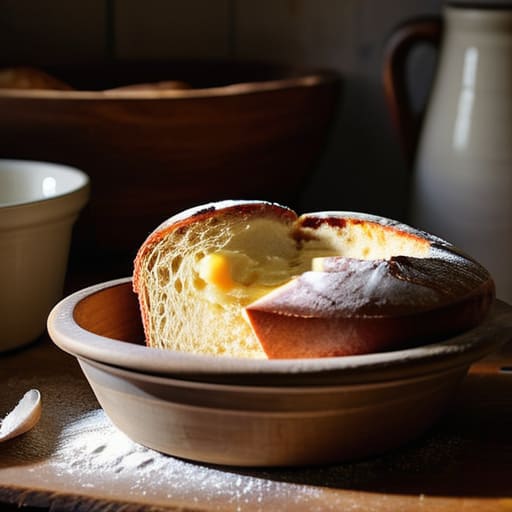
Now, if you’re heading down to the bakery, don’t go reaching for that pre-sliced, supermarket white stuff. It’s far too soft and will turn into a sodden mess before it even hits the oven. For the best bread for pudding, you want something with a bit of backbone—a thick-cut, slightly stale sourdough or even a good quality brioche if you’re feeling indulgent. I’ve always found that a day-old bloomer works wonders; the slightly drier crumb absorbs the milk and egg mixture without losing its shape. It’s one of those small details that separates a decent pudding from a truly great one.
When looking through other classic British dessert recipes, you’ll find that this dish is a bit of a chameleon. Some folk prefer a heavier, more spiced version, while others lean into a lighter, more fruit-forward approach. If you find yourself with extra raisins or perhaps a handful of sultanas left over from a Christmas cake, toss them in. You can even experiment with sweet bread pudding variations by adding a grating of nutmeg or a splash of brandy to the custard. It’s all about making it your own, much like choosing the right stone for a wall—it has to fit the space you’ve got.
Building a Creamy Custard Base for Easy Comfort Food Recipes
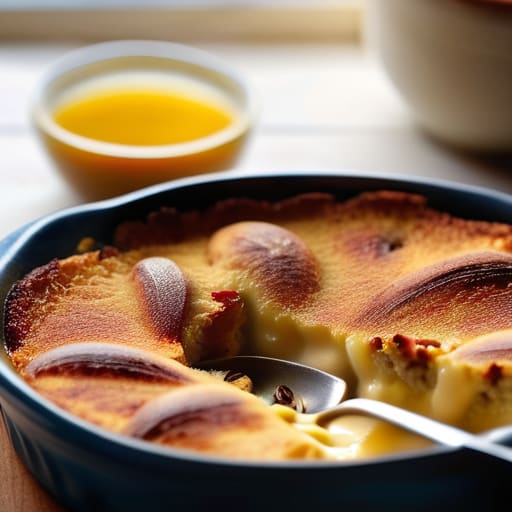
Now, if you want to move beyond the basics and really elevate your dish, you need to focus on the liquid that holds it all together. A proper creamy custard base is the difference between a dry, crumbly mess and something that actually warms you from the inside out. I remember my mother making this back in the late sixties; she never used those dusty packets of instant powder. She used real whole milk and heavy cream, whisking it over a gentle heat until it just began to thicken. If you’re looking for one of those easy comfort food recipes that feels like a proper treat, don’t skimp on the nutmeg. A light grating of fresh nutmeg into the milk while it warms makes a world of difference.
For those who like a bit of variety, you can certainly experiment with sweet bread pudding variations. I’ve found that adding a handful of sultanas or even a splash of brandy to the custard can change the whole character of the dish. It’s much like renovating an old cottage; you keep the sturdy foundations, but a few thoughtful additions can make the whole place feel new.
A few small things that make a big difference
- Don’t go using that fresh, soft sourdough you bought this morning; it’s far too springy. You want bread that’s gone a bit tired and crusty—something that’s been sitting on the counter for a day or two—so it can actually soak up the custard without turning into a heap of mush.
- If you’re adding raisins or sultanas, soak them in a splash of brandy or even just a bit of warm water for twenty minutes beforehand. There’s nothing worse than biting into a dried-out, woody grape when you’re expecting something soft and sweet.
- Don’t be afraid of the butter. I know the doctors say otherwise, but when you’re layering the bread, use generous, thick slices of salted butter. It creates those little pockets of richness that prevent the middle of the dish from becoming one big, soggy block.
- Give the dish a bit of a rest before it goes into the oven. If you let the bread sit in the milk and egg mixture for at least half an hour, the liquid penetrates right to the centre of the slices. It ensures the pudding is consistent from the top layer down to the bottom.
- Watch your oven temperature carefully. You want a steady, moderate heat—around 160°C—rather than a blast of high heat. You’re looking for a gentle bake that sets the custard and browns the top, not a scorched crust that hides a raw, liquid middle.
A Few Final Thoughts Before You Head to the Oven
Don’t go looking for those perfectly uniform, supermarket-style slices; you want bread with a bit of character and a sturdy crust to hold up against the custard.
Keep a close eye on the oven towards the end, as every kitchen’s heat behaves a bit differently, and you want a golden top rather than a burnt one.
If you find yourself with a bit of extra custard left in the pan, don’t let it go to waste—it’s just as good poured over a plain slice of toast the next morning.
The Secret in the Soak
You’ll see people trying to rush it, using fresh, airy loaves that just vanish into the custard like ghosts; if you want a proper pudding, you need bread that’s seen a day or two on the counter, something sturdy enough to hold its ground when the milk hits it.
Gordon Ellery
A Final Thought Before You Dig In
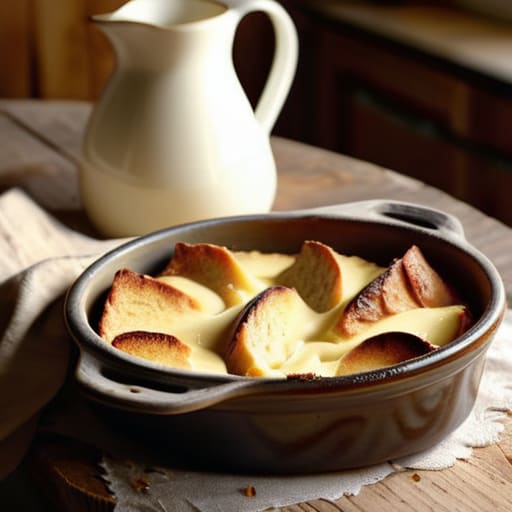
When you get to the kitchen bench, remember that there isn’t much room for error if you follow the basics. It really comes down to three things: using bread that has a bit of character—ideally something slightly stale from yesterday’s loaf—ensuring your custard is thick enough to cling to those crusts, and not being afraid to let it bake until the top is a deep, golden brown. I’ve seen many a pudding ruined by being too timid with the oven or using bread so fresh it simply turns into a sodden, shapeless mass. If you get the ratio of milk to egg right, you’ll have a dish that holds its own, much like a well-built dry stone wall stays put because the foundation was laid with care.
At the end of the day, a bread and butter pudding isn’t about being fancy or following some high-street culinary trend. It is about the simple, honest comfort of a warm dish shared at a wooden table while the rain lashes against the windowpane. I’ve sat in many a draughty kitchen from Salisbury to Winchester, and I can tell you that the best meals aren’t the ones that look perfect for a photograph, but the ones that make you feel at home. So, pull up a chair, ignore the washing up for twenty minutes, and enjoy something that was made with a bit of patience and a lot of heart.
Frequently Asked Questions
Can I use that slightly stale loaf from the counter instead of buying a fresh one?
You absolutely can, and frankly, you ought to. I’ve spent thirty years looking at the structural integrity of houses, and I can tell you that a bit of stiffness is exactly what a pudding needs to hold its shape. A fresh, soft loaf will just turn into a sodden mess under the custard. That slightly stale loaf from the counter is perfect; it’s got the character to soak up the cream without collapsing.
Is there a way to stop the top from getting too dark before the middle is actually hot?
It’s a common bother, much like trying to get a new roof to set before the rain starts. If your top is browning too quickly while the middle stays lukewarm, just pop a piece of foil loosely over the dish about halfway through. It acts as a shield against the direct heat. I’ve found that dropping the oven temperature by about twenty degrees also helps—it lets the heat soak through the bread without scorching the crust.
What's the best way to serve it if I want to keep the custard from running all over the plate?
If you’re worried about a custard flood, the trick is to let the dish rest. I usually pull it from the oven and leave it on the counter for about ten minutes before anyone touches a spoon. It allows the juices to settle and the custard to thicken slightly. Also, don’t skimp on the bread; if you’ve used proper, thick-cut slices, they’ll soak up that excess liquid like a sponge.