
I remember standing in a drafty kitchen in a mid-Victorian cottage near Chawton back in ’94, watching a young couple stare in horror at a rusted pump handle. They’d been sold on the “romantic charm” of the countryside, but they hadn’t been told that buying a house with a private water supply often means inheriting a full-time job. Most estate agents will gloss over the technicalities, painting a picture of crystal-clear springs, but they rarely mention the unseen reality of testing, filtration, and the sudden, sharp anxiety of a pump failing on a Tuesday morning in mid-winter.
I’m not here to scare you off, but I am here to make sure you aren’t caught short. Over the years, I’ve inspected enough boreholes and soakaways to know exactly where the hidden costs lie and which red flags you simply cannot ignore. In this piece, I’ll give you the straight truth about what to look for during a viewing, from the age of the tanks to the maintenance schedule you’ll eventually have to manage yourself. No fluff, just the facts you need before you sign that contract.
Table of Contents
The Truth About Well Water Quality Inspection

Now, don’t let a vendor tell you the water is “fine” just because it looks clear in a glass. I’ve seen plenty of properties in the more tucked-away parts of the Test Valley where the water looks crystal clear but hides a nasty surprise of nitrates or high manganese levels. You cannot rely on a quick visual check. A proper well water quality inspection is non-negotiable before you exchange contracts. You need to know exactly what is coming out of that tap, particularly regarding bacteria and heavy metals, because once you’ve moved in, that’s your responsibility alone.
It isn’t just about the chemistry, either; it’s about the hardware. I once surveyed a lovely little cottage near Salisbury where the owner had neglected the system for years. They ended up facing significant private well maintenance costs simply because a basic filter hadn’t been changed. If you’re looking at an older setup, ask to see the recent testing logs. If the seller can’t produce them, you should assume you’ll need to invest in your own water filtration for private wells almost immediately to meet basic potable water safety standards.
Budgeting for Private Well Maintenance Costs
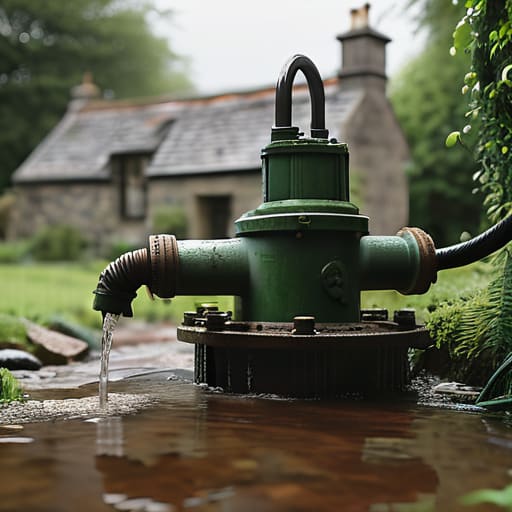
When you’re looking at the asking price for a cottage out near the edge of the village, don’t let the lack of a monthly water bill fool you into thinking you’re saving money. In my experience, the real cost isn’t the water itself, but the machinery that moves it. You need to factor in private well maintenance costs as a recurring line item in your household budget, not a one-off expense. I’ve seen many a newcomer get caught out when a submersible pump fails on a Tuesday afternoon; you aren’t just looking at the cost of the part, but the specialist who has to trek out to your property to pull it up.
I’d suggest keeping a modest “water fund” aside for the inevitable. This covers everything from the occasional water filtration for private wells to deal with seasonal mineral spikes, to the more serious business of a full well pump replacement. If you are looking at a property with an older system, I’d treat a pump replacement guide as essential reading before you even make an offer. It is much better to budget for a new motor now than to be staring at a dry kitchen tap in the middle of a heatwave.
Five things I’ve learned from years of checking pumps and looking at pipes
- Don’t just take the seller’s word that the water is “fine.” I’ve seen plenty of people swear their well was crystal clear right up until the moment the sediment started clogging the kettle. Get a professional lab test done—not just a quick strip test from the hardware shop—to check for nitrates and bacteria.
- Ask to see the well head itself. If it’s sitting low in a dip or near a field where sheep graze, you’re looking at a potential contamination headache down the line. A proper well should be capped securely and sit well above the ground level to keep the surface runoff out.
- Find out exactly how old the pump is and where it sits. If it’s a submersible pump sitting 50 feet down a narrow shaft, replacing it isn’t a quick DIY job on a Saturday morning; it’s a specialist task that will cost you a fair bit of coin.
- Check the depth of the water table from someone who knows the local geology. I remember a property near Chawton where the well was fine in February, but by August, the level had dropped so low the pump was sucking nothing but air. You need to know if your supply holds up through a dry summer.
- Look at the storage tank and the filtration setup. If the house has an old, rusted tank in the loft or a filtration system that looks like it hasn’t been serviced since the Thatcher administration, factor the cost of a full overhaul into your initial offer.
The Bottom Line for Your Move
Don’t take a landlord’s or a seller’s word for it; if the water isn’t on the mains, you need to see the most recent test results with your own eyes before you exchange contracts.
Budget for more than just the occasional filter change; you’ll need a contingency fund for pump failures or seasonal contamination, as these aren’t things you can just call the council about.
Remember that owning a well means you are the utility company; you’ll need to stay on top of the maintenance schedule, or you’ll find yourself without a working tap just when you need it most.
More Than Just a Tap
I’ve seen plenty of buyers fall in love with a beautiful thatched cottage in the valley, only to realize too late that they aren’t just buying a home, they’re taking on the job of a utility company. When the mains aren’t there to bail you out, you’re the one responsible for every drop that comes out of that tap.
Gordon Ellery
Final Thoughts Before You Sign
At the end of the day, buying a property with its own water source isn’t about being difficult; it’s about being prepared. You cannot simply assume the water coming out of the tap is as clear as it looks in a glass. You need to have invested in those professional tests to check for nitrates or bacteria, and you must account for the fact that a pump or a filtration system won’t last forever. If you haven’t looked at the age of the well casing or factored in the cost of a new submersible pump, you aren’t looking at the full picture. It is a matter of practicality over optimism—checking the pipes today so you aren’t staring at a dry kitchen sink tomorrow.
I have spent thirty years looking at floorplans and foundations, and I have learned that the best homes are the ones where nothing unexpected happens behind the scenes. There is a certain quiet pride in knowing exactly where your water comes from and knowing it is safe for your family. If you do the legwork now, you aren’t just buying a house; you are buying peace of mind that lasts for decades. A private well can be a wonderful asset in a beautiful corner of the country, provided you respect the responsibility that comes with it. Now, if you’ll excuse me, I believe I have a section of dry stone wall that won’t mend itself.
Frequently Asked Questions
If the pump fails on a Sunday evening, is there a local engineer who actually answers the phone, or am I stuck waiting until Monday?
That’s the question that keeps people awake at 2:00 AM, isn’t it? If your pump dies on a Sunday, you aren’t just looking for a plumber; you’re looking for a specialist. Most general builders in the valley won’t touch a borehole. I’d suggest getting the number for Miller’s Borehole Services in Salisbury saved in your phone now. They’re reliable, but even they aren’t miracle workers on a Sunday evening. Plan for a dry Monday.
How much of a headache is it to deal with the local council if the water quality suddenly drops after a heavy period of rainfall?
To be blunt: don’t bother calling the council. They aren’t responsible for your well, and they won’t come out to test it just because the heavens have opened. If your water goes cloudy after a downpour, that’s your business and your bill. You’ll need to call a private contractor to check for runoff or bacteria. It’s a headache, certainly, but one you handle yourself, not through a local authority office.
Can I actually get a standard mortgage on a property like this, or do the lenders get twitchy about anything that isn't on the mains?
It’s a fair question, and yes, lenders do get a bit twitchy. They aren’t inherently against private supplies, but they won’t sign off on a loan if the water source looks unreliable. You’ll likely need to provide a recent test report and proof of a working system to satisfy the underwriters. I’ve seen deals stall because a surveyor flagged a questionable borehole, so don’t take their word for it—get your paperwork in order early.