I spent forty minutes yesterday walking down Mill Lane—the one with the drainage issues that always makes the footpath a bit of a bog in November—and I saw three teenagers sitting on a damp stone wall, staring at nothing in particular. It struck me then that we spend far too much time in parish meetings discussing “strategic community frameworks” and “youth engagement initiatives” when the reality is much simpler. If we want to talk about starting a youth club in a village, we need to stop looking for government grants that don’t exist and start looking at the empty hall behind the church, which, as most of you know, has been standing there since 1892 and has a perfectly serviceable boiler.
I’m not going to give you a glossy brochure or a list of buzzwords that won’t help when the heating fails or the local council says no. Instead, I’m going to tell you exactly how to get a door open and a light on. I’ll share what I’ve learned from thirty years of watching how this community actually functions, from finding a room that isn’t drafty to making sure you have enough tea and biscuits to keep the volunteers from walking out. This is about practical, boots-on-the-ground advice for making something happen that actually lasts.
Table of Contents
Community Engagement for Rural Youth That Actually Works
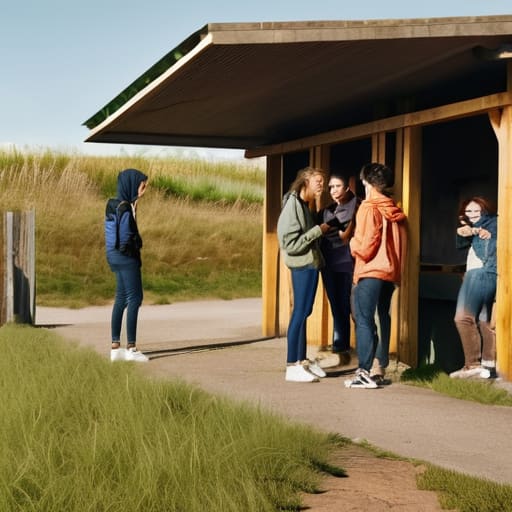
You can’t just put a notice in the parish magazine and expect a crowd to appear. I’ve seen plenty of committees spend six months arguing over the colour of a new sign while the actual young people are still loitering by the bus shelter. If you want real community engagement for rural youth, you have to go to them. That means showing up at the football pitch or the school gates, not just sitting in the village hall with a lukewarm cup of tea. It’s about listening to what they actually want—whether that’s decent Wi-Fi or just a space where they won’t be glared at by someone who thinks teenagers are a nuisance.
Once you have their interest, the heavy lifting begins with the paperwork. You’ll likely find yourself looking into securing local government grants, which is a bit of a slog, but necessary if you want more than a single folding table and a kettle. You also can’t skip the boring bits; getting your safeguarding policies for youth groups in order is non-negotiable if you want the parents to trust you. It’s a lot of legwork, but it’s better than watching another generation drift away because we couldn’t be bothered to build them a proper foundation.
Securing Local Government Grants Without the Paperwork Headache

Now, I know what you’re thinking. The mere mention of “securing local government grants” usually sends most people running for the hills, or at least straight to the pub. It feels like you need a degree in bureaucracy just to ask for a few hundred pounds for some pool tables and decent lighting. But I’ve sat through enough council meetings in the village hall—the one built in 1954, mind you, which still has that drafty latch—to know that they actually do have pots of money sitting there, just waiting for someone to ask. The trick isn’t to write a twenty-page manifesto; it’s to show them that you aren’t just a group of people with an idea, but a stable entity that won’t vanish by next Tuesday.
The secret to making the paperwork bearable is to have your safeguarding policies for youth groups sorted before you even open the application. If you can show a councillor that you’ve already thought about the practicalities—who is responsible for what and how you’ll keep the kids safe—you’ve already won half the battle. Don’t try to reinvent the wheel. Most of these forms are looking for evidence of community engagement for rural youth, so focus your answers on the actual people you intend to serve, rather than using fancy language that sounds like it was written by a consultant in London. Keep it plain, keep it honest, and keep it local.
Five things I’ve learned about making it work
- Don’t try to build it from the top down. If you sit in a meeting room with the Parish Council and decide what teenagers want, you’ll be wrong every single time. You need to go to where they actually hang out—the bus stop near the old mill or the back of the cricket pavilion—and ask them what they’re looking for. If they say they just want a place with decent Wi-Fi and a kettle, then that’s your starting point.
- The venue matters more than the fancy equipment. You don’t need a brand-new community centre; the village hall has been standing since 1924 and it’s perfectly serviceable, provided you check the heating works. A space that feels a bit lived-in and unpretentious is much more inviting to a sixteen-year-old than a sterile, brightly lit room that feels like a doctor’s waiting area.
- Find a “steady hand” to run it. A youth club isn’t a hobby for someone who wants to play games; it needs someone who can manage a bit of chaos without losing their temper. I’ve seen many good ideas fail because the person in charge couldn’t handle the noise or the occasional broken window. You need someone reliable, someone who knows the families in the village and won’t be rattled when things get a bit loud.
- Keep the food simple but constant. It sounds trivial, but if you want kids to show up regularly, you can’t expect them to live on air. A reliable supply of decent biscuits or even just a decent tea urn goes a long way. It’s about the ritual of it—knowing that on a Tuesday night, there’s a warm room and something to eat.
- Watch the transport, or don’t bother. I’ve spent years looking at property and infrastructure, and the biggest flaw in our village layout is that if you don’t have a car, you’re stuck. If your club is a twenty-minute walk from the main cluster of houses and the last bus passed at 6:00 PM, you aren’t running a youth club; you’re running a club for the three teenagers who live on the lane next to the hall.
The Short Version for the Busy Reader
Don’t bother with fancy committees; just find a room that’s dry, a kettle that works, and a group of teenagers who actually want to be there.
Forget the jargon-heavy grant applications and focus on showing the council exactly how a youth club keeps kids off the streets and out of trouble.
Success isn’t measured by how many people show up to the first meeting, but by whether the local shopkeeper and the neighbours still support you six months later.
## More Than Just a Room with Four Walls
You can throw a few beanbags in the old schoolroom and call it a club, but if you aren’t giving these kids a sense that they actually belong to the village, you’re just babysitting. A real youth club isn’t about providing a distraction; it’s about making sure the next generation doesn’t feel like they’re just living in a museum of the past.
Gordon Ellery
The Long View
At the end of the day, setting up a youth club isn’t about mastering the intricacies of grant applications or perfecting a community outreach strategy. It is about the practicalities we have discussed: finding a space that doesn’t leak when the clouds break, talking to the parents who actually know what their children need, and ensuring the paperwork doesn’t become so heavy that you give up before the first kettle is even boiled. If you can secure a room—be it the old schoolroom built in 1894 or a corner of the village hall—and get a handful of reliable folk to show up on a Tuesday night, you have already done the hardest part of the job. It is about building a structure that is sturdy enough to last beyond the first few months of enthusiasm.
I have spent thirty years looking at the bones of buildings, but the most important foundations in a village aren’t made of flint or brick. They are the connections we make between people. A youth club is more than just a place to escape the rain; it is a way of saying to our young people that they belong here, even when they feel like they don’t. If we can give them a space that is truly theirs, we aren’t just filling a gap in the weekly schedule; we are helping to ensure this village remains a living, breathing community rather than just a collection of pretty postcodes. It’s worth the effort, I promise you that.
Frequently Asked Questions
Where on earth are we actually going to find a building that isn't falling down or costing a fortune in heating?
It’s the question that keeps me up, and I don’t mean because of the coffee. You won’t find much in the village that hasn’t seen a damp patch since the seventies. My advice? Look at the church hall or the old scout hut; they’ve got character, but the heating bills will gut you. Better yet, talk to the primary school about using their classrooms after four. It’s already built, already heated, and avoids the surveyor’s nightmare.
How do we keep the older lot from grumbling about the noise every time a group meets on a Tuesday night?
Look, I’ve sat through enough parish meetings to know that a bit of noise on a Tuesday is usually enough to set the tea sets rattling. The trick isn’t to hide it; it’s to invite them in. If Mrs. Higgins from number 14 feels like she’s part of the process—perhaps by letting the kids show her what they’ve built—she’s less likely to call it a nuisance. Transparency beats a closed door every time.
If we get the funding sorted, who is actually going to show up to supervise the lot and make sure nothing gets broken?
That’s the question that keeps me up, isn’t it? You can have all the grant money in the world, but if there isn’t a responsible adult in the room, you’ve just bought a very expensive way to break windows. We can’t rely on the parish council alone; they’re stretched thin. We need a rota of local parents or retirees—people like myself—who can commit to two hours a week. It’s about presence, not policing.