I was standing by the old pavilion last Tuesday—the one built in 1924, though the roof tiles have been a mess since the late eighties—and I watched a group of youngsters kick a ball against a fence that’s seen better decades. It struck me then that most people think reviving a village sports club requires a massive government grant or a high-priced consultant in a sharp suit to draft a “strategic vision.” That’s nonsense. You don’t need a five-year roadmap or a fancy rebranding exercise to fix a place that’s lost its way; what you actually need is a decent kettle, a working door lock, and a handful of people who don’t mind getting their hands a bit dirty.
I’m not here to give you a lecture on corporate synergy or any of that modern jargon. Instead, I’m going to tell you exactly how we can get things moving again using nothing but common sense and a bit of grit. I’ll be sharing what I’ve learned from years of sitting in drafty parish halls, focusing on the practical, small-scale steps that actually keep a community together. If you want to know how to turn a derelict changing room into a place where people actually want to linger, you’ve come to the right place.
Table of Contents
Finding the Heart Through Community Engagement Strategies
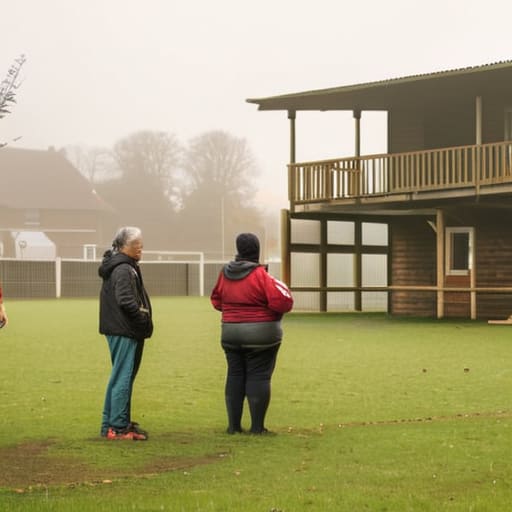
You can’t fix a club by sitting in a committee room with a clipboard and a lukewarm tea. I’ve seen it happen too often—the people who actually use the pavilion are the ones who feel most ignored. Real community engagement strategies for clubs aren’t about fancy surveys; they are about showing up where the people are. It’s about standing by the pitch on a Saturday morning and asking the parents what they actually need, rather than assuming we know. If the gate is rusted shut or the changing rooms smell of damp, people won’t come back, no matter how many emails we send.
The real backbone, however, is the people. We are currently facing a bit of a crisis with sports club volunteer recruitment, and it isn’t because people are lazy—it’s because they’re busy. We need to stop asking for “officers” and start asking for help with specific, manageable tasks. Someone might not want to be Treasurer, but they might be happy to man the tea hatch for an hour on a Sunday. It is these small, consistent contributions that build the foundation. Once you have the people, the rest—from fixing the roof to finding a new sponsor—tends to follow.
Securing Local Government Grants for Sports and Repairs
Now, I know what you’re thinking. The word ‘grant’ usually conjures up images of dusty offices and forms so long they’d make a surveyor weep. But if you want to get the pavilion roof sorted or fix that crumbling retaining wall by the pitch, you can’t just rely on the dwindling contents of the biscuit tin. Securing local government grants for sports isn’t about being a professional bureaucrat; it’s about proving that your club is a vital piece of village infrastructure. When I was valuing properties in the seventies, a well-maintained communal space always added value to the surrounding area, and the council views these clubs in much the same light.
You have to frame your application around the tangible benefits. Don’t just ask for money for new nets; talk about improving club facilities and infrastructure to ensure the next generation has a safe place to play. If you can show that a new floodlit area will help with increasing youth participation in local sports, you’re much more likely to see a cheque in the post. It’s about demonstrating that the club isn’t just a hobby for a few enthusiasts, but a cornerstone of the parish that deserves to stand for another fifty years.
Five ways to get the boots back on the pitch
- Look at the building, not just the budget. I’ve spent thirty years looking at damp and subsidence, and I can tell you that a leaky changing room roof or a rusted gate will put people off before they’ve even tied their laces. Fix the small, visible bits of decay first; it shows the village you actually care about the place.
- Stop trying to please everyone at once. If you try to host a cricket match, a yoga class, and a heavy metal concert in the same week, you’ll end up with nothing. Pick one thing that works—even if it’s just a Tuesday night walking group—and do it well until the momentum builds.
- Use the people who are already there. You don’t need a professional marketing firm; you need the person who knows everyone at the post office and the lady who runs the school gates. A handwritten note or a chat over the garden fence carries more weight in a place like this than a glossy Facebook advert.
- Don’t forget the “after-sport” crowd. A sports club shouldn’t just be for the players. If you can get a decent kettle going and a decent biscuit tin stocked, you’ll find the parents, the spectators, and the retirees will start showing up, and that’s where your volunteer numbers come from.
- Keep the books as tidy as a well-laid dry stone wall. If people see that every penny of the membership fee is going towards new nets or a new boiler, they’ll give it. If the finances look like a jumble of old receipts and guesswork, they’ll keep their wallets shut.
What we can actually take away from this
Don’t wait for a grand committee to form; start with the three people who are already showing up to the Tuesday night sessions and build from there.
When looking at the clubhouse, look at the roof and the damp first—you can’t run a successful club if the changing rooms are a health hazard.
A sports club survives on more than just players; it needs the people who can manage a spreadsheet or fix a leaking tap just as much as it needs the ones on the pitch.
More Than Just a Scoreboard
You can patch a leaking roof on the pavilion or repaint the changing rooms, but you can’t fix a club with a hammer if the people have stopped showing up; a sports club lives or dies not by its kit, but by whether the village feels it actually belongs to them.
Gordon Ellery
The Long View

We have covered a lot of ground, from the granular details of securing a grant to the more delicate work of getting people through the clubhouse doors again. It isn’t just about fixing a leaky roof—though, as any surveyor will tell you, a damp ceiling is the first sign of a larger problem—it is about the logistics of connection. You need the funding to keep the lights on and the community engagement to ensure there is actually someone there to see the light. If we can marry the practical, such as the paperwork for local council subsidies, with the social, such as making sure the tea is hot and the welcome is genuine, we aren’t just repairing a building. We are rebuilding a foundation that can withstand another fifty years.
At the end of the day, a village sports club is much like a well-built dry stone wall; it only stands if the stones are placed with intention and the gaps are filled with care. It won’t happen overnight, and it certainly won’t happen by one person doing all the heavy lifting. It requires a few more hands, a bit of patience, and the understanding that we are all stewards of these spaces. When we see the local kids out on the pitch or the older crowd gathered in the pavilion, we’ll know it was worth the effort. It is about making sure this village remains a place where people don’t just live, but actually belong.
Frequently Asked Questions
If we manage to get the grant for the roof repairs, who is actually going to be responsible for the day-to-day upkeep of the pavilion?
That’s the question that usually follows the excitement of a grant approval, isn’t it? The money fixes the slate, but it doesn’t mop the floors. Typically, the responsibility falls to the club’s management committee—the same folks who handle the subs and the fixtures. If you don’t have a designated grounds warden or a rota for the small things, that pavilion will be derelict again by the time the next decade rolls around.
How do we bring in the younger families without making the old guard feel like they're being pushed out of their own club?
It’s a delicate balance, much like trying to set a dry stone wall without the whole thing leaning. You don’t start by changing the rules; you start by asking for help. If the old guard feels their history is being respected—perhaps by involving them in the upkeep of the pavilion—they’re less likely to bristle when a new family asks to use the pitch for a Saturday morning kickabout. It’s about addition, not replacement.
Is there a way to keep the club running without it becoming a full-time job for the few people who actually show up to the meetings?
That is the question that keeps most of us awake at night. The mistake is trying to build a committee of ten when you only have three willing souls. Don’t aim for a new board of directors; aim for a task list. Instead of asking someone to “be on the committee,” ask if they can manage the pitch bookings or handle the kit orders. Small, discrete jobs are much easier to swallow than a lifelong commitment.