I was standing in the garden last Tuesday, looking at a section of dry stone wall that’s been leaning since the Great Storm of 1987, and I realized I’d spent twenty minutes just trying to find my footing on the damp grass. It struck me then how much nonsense is floating around these days about how to stay active in retirement. You see these glossy magazines suggesting you need a gym membership, a high-tech wearable, or a specialized yoga instructor to keep the rust off. It’s all a bit preposterous, if you ask me. You don’t need a membership to keep your joints moving; you just need a reason to get out of the armchair and onto the lane.
I’m not here to sell you a lifestyle or a piece of expensive kit. What I want to do is share what actually works when you’ve moved past the era of running marathons and into the era of keeping the engine running. I’ll tell you about the walks that are actually worth the effort, the small chores that keep your grip strong, and why a bit of honest, daily movement is better than any fancy fitness regime.
Table of Contents
The Benefits of Walking for Retirees and Real Connection
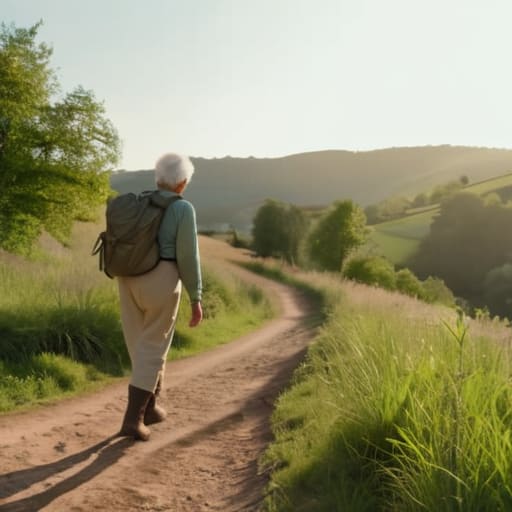
I’ve spent a fair amount of time walking the bridleways between our village and the next parish over, and I can tell you that a brisk stroll does more than just clear the head. It is one of those reliable low impact exercises for seniors that doesn’t leave you feeling like you’ve been through a hedge backwards the next morning. I find that if I skip my morning loop around the old mill—which, mind you, was rebuilt in 1842 after the flood—my knees start to feel the stiffness by lunchtime. Getting out there is about improving balance and flexibility in older age, ensuring you can still navigate a steep driveway or a loose paving stone without a second thought.
Beyond the physical side, there is the matter of the people. You’ll find that a walk is rarely a solitary affair if you time it right. Whether it’s a nod to the postman or a twenty-minute chat with Arthur near the village green, these small interactions are the real benefits of walking for retirees. It keeps you tethered to the community, which is just as vital as any gym routine.
Low Impact Exercises for Seniors Who Value Their Knees

Now, I’m not one for the high-intensity gym culture—I’ve seen enough people in Lyneham trying to lift weights that clearly belong to a different species, and it rarely ends well for the joints. If you want to keep moving without feeling like your knees are being ground in a mortar and pestle, you have to look at low impact exercises for seniors that respect the mechanics of the body. Swimming is the gold standard; I remember a local pool that opened in ’84, and the water provides a buoyancy that makes you forget you’ve got a bit of a dodgy hip. It’s about moving through the resistance without the jarring impact of a hard pavement.
Another thing worth considering is Tai Chi or even a basic stretching routine in the garden. It isn’t just about being limber; it is about improving balance and flexibility in older age, which is much more important than being able to run a marathon. If you lose your footing on a damp stone step, you won’t be much use to anyone. A bit of consistent, gentle movement keeps the hinges greased and the muscles from seizing up after the morning chill sets in.
A few practical ways to keep the rust off
- Don’t wait for a formal class to start moving; just aim for the garden. I’ve found that spending an hour weeding the vegetable patch or tidying the borders does more for my mobility than any expensive gym membership ever could, provided you don’t overdo it on a damp Tuesday.
- Find a regular rhythm with your local group. Whether it’s the Tuesday morning coffee walkers or the parish hall bowls club, the social bit is what keeps you showing up when the weather turns grey and the joints feel a bit stiff.
- Use your household chores as a bit of a workout. I make a point of carrying the shopping in one trip rather than two, and I’ve learned that even a bit of light dusting requires a bit of stretching that keeps the shoulders from seizing up.
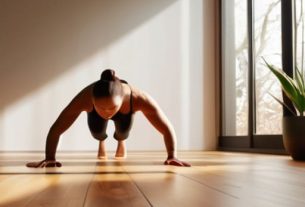
- Keep a bit of resistance work in your routine without the heavy weights. A simple set of light dumbbells while you’re watching the evening news—or even just some wall push-ups in the hallway—helps maintain the muscle you need to keep your balance when walking on uneven lanes.
- Listen to your body, not your pride. If the dampness in the air makes your hip ache, it’s perfectly fine to swap the long walk for some gentle stretching in the living room; the goal is to stay moving for the long haul, not to win any races.
A Few Things to Keep in Mind
Don’t go looking for a gym membership just yet; most of the movement you actually need can be found on the footpath behind the old mill or the loop around the village green.
Listen to your joints more than your ego, because it is better to take a shorter, flatter walk today than to spend next Tuesday icing a swollen knee.
Make sure your movement involves seeing a familiar face, as a bit of light exercise is worth twice as much when it comes with a proper chat over a garden gate.
The Value of Movement
It isn’t about training for a marathon or hitting some arbitrary number on a fitness tracker; it’s about making sure you can still walk down to the post office without needing a sit-down halfway through. If you keep the joints moving, even if it’s just a slow loop around the village green, you’re keeping your independence, and that’s worth more than any gym membership.
Gordon Ellery
A Final Word Before You Head Out

When you look back at everything we’ve discussed, it isn’t about training for a marathon or suddenly deciding to join a high-intensity gym in the next town over. It’s about the small, practical things—taking that walk down to the post office, keeping the joints moving with a bit of stretching, and making sure you aren’t just sitting stationary in the lounge all afternoon. Whether it’s protecting your knees with low-impact movement or using a stroll to catch up with a neighbour, the goal is simply to keep the machinery running smoothly. I’ve seen plenty of folks try to do too much too fast and end up sidelined for a month; the trick is to find your own pace and stick to it, even on the days when the weather looks a bit grey.
At the end of the day, staying active is less about a fitness regime and more about maintaining your independence. I know from years of surveying properties that a house is only as good as its foundation, and your body is much the same. If you keep moving, you’ll find you can still manage the garden, climb the stairs without a fuss, and keep up with the local news. Don’t wait for a doctor to tell you to get moving; just lace up your boots and get out the door. The village is waiting, and I’ll likely see you on the lane.
Frequently Asked Questions
What should I do if the local footpaths are too muddy or uneven for my balance?
If the lanes around here have turned into a bog after a week of rain, don’t risk a twisted ankle just for the sake of it. I’ve seen enough falls on the bridleway near St. Mary’s to know better. Instead, head to the village hall or the community centre; they’ve got flat, level floors that don’t care about the weather. If you prefer being outdoors, stick to the paved perimeter of the park—it’s a predictable surface.
Are there any local walking groups or clubs that aren't just for people in their twenties?
You’ll find plenty of us out there, I promise. The village Ramblers meet every Tuesday at ten from the post office—it’s a steady pace, nothing too strenuous, and we usually finish at the Red Lion for a tea. There’s also the Tuesday morning Tai Chi group in the church hall; it’s more about balance than anything else. Don’t worry about being fast; most of us are just happy to be moving.
How much should I actually be doing each day without overdoing it and ending up with a sore hip?
Look, I’m no doctor, but I’ve spent enough time on uneven footpaths to know the difference between a good ache and a bad one. If you’re starting out, aim for twenty minutes of steady movement—a stroll to the post office and back is plenty. Don’t try to tackle the ridge walk on day one. If your hip starts thumping, stop. It’s better to do ten minutes daily than to spend a week hobbling.