I was standing in the hallway of a mid-Victorian semi in Upper Clatford last Tuesday, listening to the familiar, rhythmic scritch-scrape of a heavy oak door catching on the threshold. Most people will tell you that you need to call in a carpenter or replace the entire frame, but that’s a load of nonsense that’ll cost you a week’s wages. In my thirty years of surveying, I’ve found that knowing how to fix a sticking door is rarely about expensive replacements; it’s usually just about understanding how a house breathes. Whether it’s the timber swelling after a damp Hampshire autumn or a single screw that’s decided to give up the ghost, the solution is almost always simpler than the man in the van wants you to believe.
I’m not going to give you any of those polished, “five easy steps” that look good in a magazine but fail in a real cottage. Instead, I’ll walk you through the practical reality of the job, from checking the hinge alignment to the subtle art of sanding back a high spot. I’ve spent enough time tugging at stubborn handles to know exactly where to start, and I promise to show you how to get it right without making a mess of your skirting boards.
Table of Contents
- Step-by-Step Instructions
- Understanding Wood Door Expansion Causes and Seasonal Door Swelling Fixes
- Tight Door Frame Solutions From Adjusting Door Hinge Screws
- A few bits of advice from a man who's spent too much time with a screwdriver
- A few things to keep in mind before you reach for the plane
- A bit of patience and a steady hand
- A final word on the matter
- Frequently Asked Questions
Guide Overview
Tools & Supplies
- Screwdriver (to tighten loose hinge screws)
- Hand plane or Sandpaper (to shave down the sticking area)
- Measuring tape (to identify contact points)
- Wood glue (if hinge replacement is needed)
- Sandpaper (120-220 grit for smoothing)
Step-by-Step Instructions
- 1. Before you go grabbing the heavy tools, you need to find out exactly where the trouble is. Close the door halfway and look at the gap between the door and the frame. If it’s rubbing at the top, it’s usually a hinge issue; if it’s the side, the house might be settling. I’ve seen enough old cottages in the valley to know that a slight shift in the foundations can make even the best-fitted door act like it’s got a mind of its own.
- 2. Once you’ve spotted the rub, check the hinges. This is the most common culprit, especially in houses built before the 1950s where the timber has had a few decades to move. Take a screwdriver and see if any of the screws are sitting loose in their holes. If they are, don’t just tighten them and hope for the best; they’ll likely just spin again.
- 3. If the screws are spinning, you’ll need to do what we used to call “plugging” them. Remove the screw entirely, take a couple of wooden matchsticks or even some decent quality toothpicks, dip them in a bit of wood glue, and stuff them into the hole. Once you’ve hammered them in and trimmed them flush, you can drive the screw back in. It gives the threads something solid to bite into, and it’ll hold much better than a hollow hole.
- 4. If the hinges are tight but the door still won’t swing true, you might need to check if the hinge itself is slightly bent. It sounds unlikely, but I’ve seen it happen after a particularly heavy door has been slammed a few too many times. Use a small adjustable wrench to gently straighten the hinge leaf if it looks out of alignment. Just be careful; if you go too far, you’ll end up with a gap on the opposite side that’s even worse.
- 5. Now, if the door is rubbing against the frame because the wood has swollen—which happens quite often in our damp Hampshire winters—you might have to take a bit off the edge. Don’t go out there with a chainsaw; start with a piece of fine-grit sandpaper. Rub the area where it’s catching until you see some light wood appearing. It’s a slow and steady process, but it’s much easier to take more off later than to try and put it back on.
- 6. If the sandpaper isn’t doing the job and you’ve decided to use a plane, please, for the love of all that is holy, mark your line clearly with a pencil first. There is nothing more frustrating than taking a quarter of an inch off a door only to realise you’ve made it look like a carpenter’s mistake. Aim for just a hair’s breadth at a time.
- 7. Finally, once you’ve corrected the alignment or shaved down the wood, don’t forget to treat the bare patch. If you’ve sanded it down or planed it, that raw wood is sitting there vulnerable to the moisture in the air. Give it a quick dab of varnish or a bit of matching paint to seal the grain, otherwise, you’ll find yourself back in the same position by next November.
Understanding Wood Door Expansion Causes and Seasonal Door Swelling Fixes
If you’ve lived in these parts long enough, you’ll know that the weather has a way of moving things that shouldn’t move. I’ve seen many a fine oak door, much like the ones in the old cottages near the High Street, start to bind up just as the damp sets in during November. These wood door expansion causes aren’t magic; it’s simply the timber breathing. When the humidity rises, the wood fibers soak up moisture and swell, often resulting in the door rubbing against the jamb with a stubbornness that would test a saint.
When you’re looking for seasonal door swelling fixes, my first instinct isn’t to grab a saw. I usually start by checking if the house has settled or if the hinges have simply gone slack. Often, a bit of luck is found in adjusting door hinge screws to pull the leaf back into alignment. If that fails, and you’re feeling brave, using a hand plane on doors is a more permanent, albeit slightly more permanent, way to reclaim your peace and quiet. Just remember to take off a shaving at a time; you can always take more off, but you can’t put it back.
Tight Door Frame Solutions From Adjusting Door Hinge Screws
Now, if you’ve checked for swelling and the wood itself is fine, the culprit is likely hiding in plain sight: the hinges. Over the years, particularly in older cottages around here where the foundations have a bit of character, the weight of a heavy oak door can cause the frame to sag just a fraction of an inch. It sounds minor, but that’s enough to cause a door rubbing against jamb every single time you try to enter.
Before you go reaching for a saw, try adjusting door hinge screws first. I’ve found that often the top hinge has simply pulled slightly away from the timber. Grab a screwdriver—not a power drill, mind you, as you’ll likely strip the screw head—and see if you can tighten those fixings. If the screw just spins in the hole without gripping, you’ve got a stripped void. In those cases, a couple of wooden matchsticks dipped in PVA glue and shoved into the hole can give you the bite you need. It’s a simple bit of tight door frame solutions that saves you from the much more permanent task of using a hand plane.
A few bits of advice from a man who's spent too much time with a screwdriver
- Check your hinges for the obvious first; I’ve often found that a single loose screw on the top hinge—the one that takes the most weight—is enough to let the whole door sag and scrape against the frame.
- If you’re tempted to reach for the sandpaper, stop and look at the rubbing point first; sometimes a bit of wax or even a plain old candle rubbed along the edge is all you need to stop the friction without losing the wood.
- Don’t go hacking away at the bottom of the door just because it’s catching on the carpet; if you haven’t checked that the floorboards haven’t shifted slightly since the house was built in the late sixties, you might find yourself cutting far more than is necessary.
- If the door is sticking because of the weather, remember that wood is a living thing that breathes; if you try to plane it down during a damp November, you’ll likely find it’s loose and rattling by the time the July heat hits.
- Always keep a small collection of longer screws in your toolbox; if the standard ones aren’t holding the hinge steady against the frame, a slightly longer screw can bite into the timber stud behind it and pull everything back into alignment.
A few things to keep in mind before you reach for the plane
Don’t go hacking at the wood straight away; most of the time, a bit of patience and a screwdriver to tighten a loose hinge will do more than a saw ever could.
Remember that timber is a living thing that breathes with the seasons, so if the door only sticks in the humid months of July and August, you might just have to live with it rather than ruining the finish.
Always work in small increments, because it is a much shorter walk to the hardware shop to buy a new hinge than it is to replace a door you’ve accidentally shaved down too far.
A bit of patience and a steady hand
You can spend a whole afternoon wrestling with a stubborn door, but most of the time, it isn’t a battle you’ll win with brute force; it’s usually just a matter of finding that one loose screw or a bit of seasonal swell that needs a gentle nudge rather than a sledgehammer.
Gordon Ellery
A final word on the matter
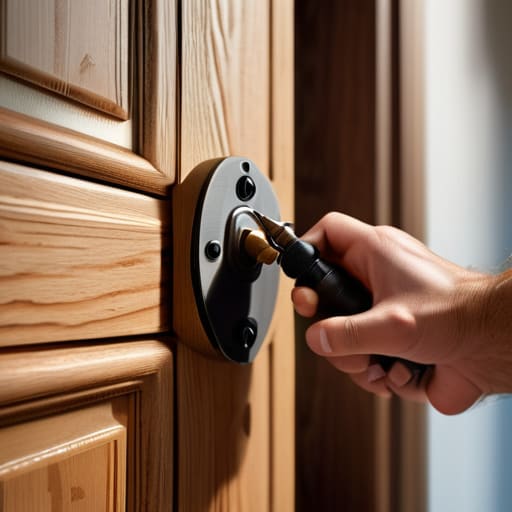
If you have followed the steps, you should find that most sticking doors aren’t actually broken; they are simply reacting to the world around them. Whether it was a matter of tightening those loose hinge screws to realign the leaf, or perhaps just giving the wood a bit of breathing room after a particularly damp autumn, the solution is usually found in the details. I have found that most people jump straight to the sandpaper, but if you take the time to identify the actual cause—be it seasonal swelling or a shifting frame—you save yourself a great deal of unnecessary sanding and mess. It is better to fix the root of the problem than to simply shave away the wood until the gap is wide enough to let a draught through.
At the end of the day, maintaining a home is much like maintaining a dry stone wall; it requires a bit of patience and a willingness to get your hands slightly dirty. A house is a living thing that moves and breathes, and a door that sticks is just its way of telling you it needs a little attention. Don’t let a stubborn piece of timber ruin your afternoon or make you feel like the house is falling down. Once you have sorted it, you’ll find that the small victories are often the most satisfying ones. Now, I suggest you put the screwdriver away and go and have a proper cup of tea.
Frequently Asked Questions
If I’ve tightened the hinge screws and the door is still catching, could it be that the actual frame has gone wonky?
It very well could be. I’ve seen plenty of old cottages in the valley where the foundations have settled more than a few inches since the mid-Victorian era. If the house has shifted, the frame follows suit, and no amount of screw-tightening will fix a frame that’s no longer square. Give it a quick check with a spirit level; if the plumb is gone, you’re looking at a structural nudge rather than a simple DIY fix.
Is it worth me trying to sand the edge down myself, or am I more likely to end up with a gap that looks a right mess?
Now, if you’ve got a steady hand and a decent block of sandpaper, you can certainly try. I’ve seen plenty of people take a bit off the edge only to find they’ve left a tapered mess that looks like a botched job from the seventies. If the door is solid timber, go slow. But if it’s a cheap veneer, one slip and you’ll be looking at a gap that’ll haunt you every time you walk past.
I noticed the door sticks more in the evenings; does that mean I should be looking at the heating or the humidity in the hallway?
It’s likely a bit of both, but I’d put my money on the heating. When the radiators kick in during the evening, that sudden rise in temperature dries out the air, causing the wood to shrink or shift. However, if your hallway is particularly damp, the wood might be reacting to the moisture levels first. I’ve seen plenty of Victorian frames struggle with this seasonal tug-of-war between dry heat and humid air.