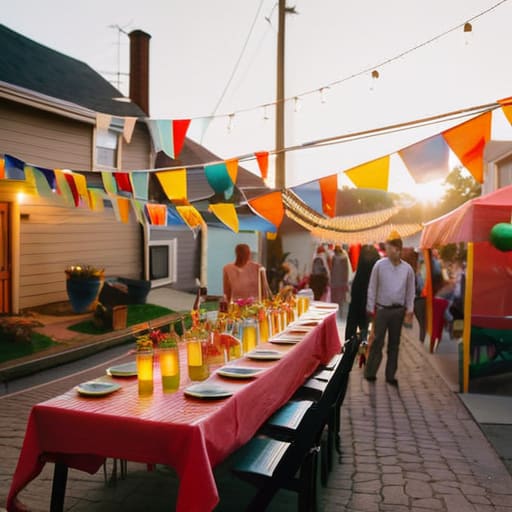
I remember the 1992 Jubilee celebration down on Mill Lane—the one where the marquee collapsed because someone thought a bit of twine and a prayer was enough to hold up heavy canvas. We spent more time arguing about the exact placement of the folding tables than we did actually talking to one another. Most people think that learning how to organise a street party involves hiring a professional event planner or spending a small fortune on bunting that’ll just end up in a skip by Monday morning. They’re wrong. It isn’t about the fancy decorations or having a perfectly coordinated spreadsheet; it’s about making sure the person three doors down actually knows your name.
I’m not going to give you a glossy, expensive checklist that requires a degree in project management. Instead, I’ll tell you what actually works when you’re standing on a tarmac road with a lukewarm thermos and a handful of neighbours who haven’t spoken since the planning permission dispute of ’08. I’ll show you how to cut through the nonsense and build something that lasts longer than the tea gets cold. This is about real community, not just a fancy postcode.
Table of Contents
- Navigating the Local Council Event Application
- Smart Community Event Budget Planning for Real People
- Five bits of practical advice before you lay the bunting
- Three things to remember before you hang the bunting
- The Real Secret to a Good Street Party
- Final Thoughts Before the bunting Goes Up
- Frequently Asked Questions
Navigating the Local Council Event Application

Now, this is where most people lose their nerve. You’ll find that the local council event application isn’t actually the monster the rumours make it out to be, but it does require a bit of patience and a very tidy desk. I remember trying to get permission for the Jubilee bunting back in ’77—well, I wasn’t the one in charge then, but I remember the paperwork was a nightmare. Nowadays, they mostly want to know about your traffic management and where the bins are going. Don’t leave it until the week before, either; the council offices tend to move at the pace of a snail on a Sunday afternoon, and you don’t want to be chasing them while the bunting is already hanging.
When you are managing street party logistics, the key is to be boringly thorough. If you tell them you’ll have a clear path for emergency vehicles, make sure you actually have one. They’ll ask about your street party safety checklist, so don’t just tick boxes to get it done. Think about the uneven paving stones near the old smithy or the way the lane dips near the bend. If you show them you’ve actually walked the ground and thought about the risks, they’re far more likely to give you the nod.
Smart Community Event Budget Planning for Real People

Now, let’s talk about the money, because this is where most well-meaning committees fall apart. When you start community event budget planning, don’t go looking for a grand sponsorship from the county council; they aren’t handing out much these days. Instead, I’ve found that a simple “bring what you can” approach works best. If you’re planning a proper afternoon of tea and sandwiches, you’ll find that people are more than happy to chip in five pounds or bring a homemade cake, provided you aren’t asking for a fortune upfront.
The trick to managing street party logistics without going broke is to keep it local. I remember a gathering near Chawton back in ’98—they spent a ridiculous amount on branded bunting and plastic plates that ended up in the bin by sunset. Don’t make that mistake. Borrow the folding tables from the parish hall, ask the neighbours to bring their own garden chairs, and use real crockery if you can. If you spend your budget on quality food and a decent marquee rather than fancy decorations, people will actually remember the day for the right reasons.
Five bits of practical advice before you lay the bunting
- Don’t try to do it all yourself. I’ve seen many a well-meaning person burn out by week two trying to manage the tea, the music, and the road closures alone. Find three or four reliable neighbours—the ones who actually show up to the parish meetings—and divide the work. One person handles the permits, one manages the money, and another keeps an eye on the bunting.
- Check your terrain before you commit to a layout. I spent years looking at foundations, and I can tell you that a patch of ground that looks fine in July can turn into a boggy mess if we get a week of heavy rain. If you’re setting up heavy trestle tables, make sure they aren’t going to sink into the grass or wobble on an uneven verge.
- Keep the food simple and the rubbish plan simpler. You don’t need a professional caterer; a good old-fashioned potluck works best, provided you’re clear about who’s bringing what. More importantly, make sure there are plenty of heavy-duty bins positioned near the food area. There is nothing that ruins a village atmosphere faster than a wind-blown pile of paper plates scattered across the lane.
- Mind the noise and the timing. A street party is lovely, but it shouldn’t become a nuisance to the elderly residents or those with young children. Aim to have the loudest bits of the afternoon finished by 7:00 PM. It’s better to end on a high note than to have half the street looking at you crossly through their curtains because the music is still thumping at ten o’clock.
- Make sure there is a way for people to actually talk. It sounds obvious, but if you just set up a row of tables facing the same direction, people tend to eat in silence. Arrange the seating in small clusters or circles. The whole point of this isn’t just to eat a sausage roll; it’s to find out that the person three doors down has been living there for twenty years and knows exactly why the drainage in the cul-de-sac is so poor.
Three things to remember before you hang the bunting
Don’t get bogged down in the paperwork; the council wants to see a plan, but your neighbours want to see a person, so make sure you’ve spoken to the people on your lane before you sign anything official.
Keep your budget realistic and don’t expect everyone to chip in twenty pounds; a few people bringing a tray of scones or a crate of cider often does more for the atmosphere than a formal collection box.
A street party isn’t about having the fanciest decorations or a professional marquee; it’s about making sure the person three doors down feels invited to sit down and stay a while.
The Real Secret to a Good Street Party
You can have the most expensive marquee in the county and a perfectly balanced spreadsheet, but if you haven’t spent ten minutes leaning over a garden fence to see who’s actually willing to bring a folding chair, you aren’t planning a party—you’re just managing an event.
Gordon Ellery
Final Thoughts Before the bunting Goes Up

At the end of the day, organising a street party is less about the paperwork and more about the preparation. You’ve dealt with the council, you’ve tallied up the pennies for the tea and biscuits, and you’ve likely spent more time than you’d care to admit checking if the road surface is level enough for a folding table. It’s a lot of legwork, but if you follow the plan, you won’t find yourself standing in the middle of the lane at noon with no ice and a broken gazebo. Just remember that the logistics are the skeleton, but the people are the flesh and blood. Keep your budget tight, your permits in order, and don’t forget to check the weather forecast twice before you commit to the marquee.
I’ve lived in enough villages to know that the best memories aren’t made of the expensive catering or the fancy decorations, but of the conversation that happens when the sun starts to dip behind the old oak tree. A street party is a rare chance to see the person living three doors down not just as a face behind a windscreen, but as a neighbour. It’s about turning a collection of brick and mortar into something that actually feels like a community. So, get the bunting out, pull up a chair, and enjoy it. You’ve done the hard graft; now it’s time to simply enjoy the company.
Frequently Asked Questions
What on earth do I do if half the street says they're in, but the other half thinks it'll be a nightmare?
You’ve hit the classic village divide. It’s usually not malice; it’s just fear of the noise or the blocked driveway. Don’t try to win an argument at the parish meeting. Instead, walk the pavement. Pop round to the skeptics with a bit of news from the newsletter. Listen to their specific worries—is it the parking or the timing? If you can promise the road is clear by 9:00 PM, you’ll win them over.
Do I actually need to close the road off with official barriers, or is a few cones and a polite sign enough?
Now, don’t be tempted by the “cones and a sign” approach. I’ve seen it go wrong on more than one lane between Salisbury and Andover. If you haven’t got the formal Temporary Traffic Regulation Order and the proper barriers, you’re asking for trouble—either with the Parish Council or a very confused delivery driver. If a car clips a child’s balloon because you weren’t official, a polite sign won’t settle the insurance claim. Do it properly.
Who's responsible if someone trips over a cable or a stray bunting string during the festivities?
Now, this is where people tend to get a bit twitchy. Legally, the person organising the event—the “event organiser”—carries the weight. If you’re the one setting up the trestle tables and running cables across the lane, you’re responsible for making sure they’re taped down or covered. My advice? Don’t wing it. Get a basic public liability insurance policy; it’s cheaper than a solicitor and far less headache than a trip over a rogue bit of bunting.