
I’ve seen enough “gourmet” cookbooks to know they’re mostly just expensive paper designed to make you feel like you’ve failed at a simple task. You don’t need a dozen exotic spices or a sous-chef to master how to make soup from leftovers; you just need a heavy pot and a bit of common sense. I remember my wife, Margaret, used to roll her eyes at those fancy recipes that called for hand-foraged herbs when a bit of dried thyme from the cupboard would do the job just as well. We aren’t trying to win a Michelin star here; we’re just trying to make something actually edible out of what’s sitting in the fridge.
I’m not going to give you a list of complicated techniques that require a trip to the specialty shop in Salisbury. Instead, I’ll show you how to look at those wilted carrots, that half-knob of cheese, or that bit of roast chicken from Sunday and turn them into a proper, warming meal. My approach is built on practicality and thrift, the kind of knowledge you pick up after years of living in a house that actually needs maintaining. We’ll keep it simple, honest, and most importantly, delicious.
Table of Contents
- Repurposing Cooked Vegetables Into Something Actually Decent
- Reducing Food Waste in the Kitchen You Know Best
- Five ways to get it right without making a mess of things
- A few things to keep in mind before you start
- A bit of common sense in the kitchen
- A bit of common sense in a pot
- Frequently Asked Questions
Repurposing Cooked Vegetables Into Something Actually Decent

If you’ve got a few roasted carrots or some boiled potatoes sitting lonely in a Tupperware container, don’t let them go soft. I’ve spent enough time in my own kitchen to know that repurposing cooked vegetables is often faster than starting from scratch. Take those leftover roasted root vegetables—the kind that have gone a bit limp in the fridge—and throw them straight into a pot with a splash of water or some stock. If you blitz them with a hand blender, you’ll find they create a texture that’s far more substantial than if you’d just boiled them fresh.
It’s also worth keeping an eye on your flavor balancing in soups once those vegetables are in. If the leftovers taste a bit flat, a tiny knob of butter or a squeeze of lemon can do more work than a handful of salt ever could. I find that even the most tired-looking veg can be rescued if you treat them with a bit of care. It’s a sensible way of reducing food waste in the kitchen, and frankly, it saves you the bother of peeling and chopping when you’re tired after a long afternoon in the garden.
Reducing Food Waste in the Kitchen You Know Best
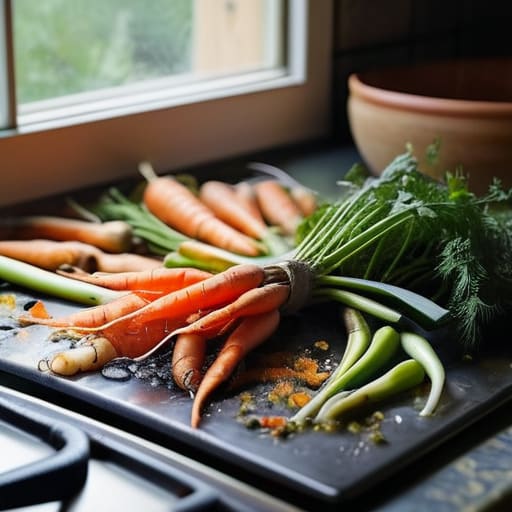
It isn’t just about the vegetables, though. Most of us have a habit of tossing things into the bin that actually hold a fair amount of character. I’ve spent many an afternoon looking at the bottom of a fridge drawer and seeing nothing but disappointment, but that’s usually because we aren’t looking closely enough. A good way to start reducing food waste in the kitchen is to stop seeing scraps as rubbish and start seeing them as ingredients. If you have the patience, keep a clean container in the freezer for your onion skins, carrot ends, and even those leek tops that look a bit sad. Once it’s full, you’ve got the foundation for stock making from scraps that beats any salty cube you’ll find in the supermarket.
Beyond the scraps, it’s about how you manage your cupboards. I always keep a few kitchen pantry staples for soup on hand—things like dried lentils, a tin of coconut milk, or a decent jar of bouillon—so that when the fridge is looking thin, you aren’t left stranded. It’s about being prepared, much like making sure your guttering is clear before the autumn rains arrive.
Five ways to get it right without making a mess of things
- Keep a dedicated container in the bottom drawer of your fridge for the “bits and pieces”—that half-onion, the single carrot, or the woody ends of some leeks. It’s much easier to make a base when you aren’t hunting through the vegetable crisper for scraps.
- Don’t forget the liquid. If you’ve got a bit of stock left in a carton, use it; if not, a good splash of water and a pinch of salt will do, but don’t go expecting a Michelin-star broth from a handful of wilted greens.
- Watch your textures. If you’re working with something soft like boiled potatoes or old squash, a quick blitz with a hand blender makes a lovely, thick consistency. If you’ve got something firmer, like roasted cauliflower, leave it in chunks so you actually have something to chew on.
- Use your aromatics early. Even if the main vegetables are cooked, starting with a bit of fresh garlic or a tiny bit of butter in the pan before you add your leftovers will wake the whole pot up. It makes the difference between a soup that tastes like “old food” and one that tastes like dinner.
- Season at the very end. As you know, when you reduce a liquid down, the saltiness concentrates. I’ve seen many a well-intentioned cook ruin a perfectly good pot of vegetable scraps by over-salting it at the start. Taste it first, then decide.
A few things to keep in mind before you start
Keep a bit of stock or even just a bouillon cube in the cupboard; you can’t make a proper soup out of thin air, and a decent liquid base is what holds the whole thing together.
Don’t be afraid to use the bits you usually bin, like onion skins or carrot tops, provided they’re clean; they add a depth of flavour that you just won’t get from a packet.
Remember that a soup is never truly finished until you’ve tasted it; a pinch of salt or a squeeze of lemon at the end can be the difference between something bland and something worth eating.
A bit of common sense in the kitchen
I’ve spent thirty years looking at the bones of houses, but I’ve learned just as much from the bones of a Sunday roast; you don’t need a fancy recipe to make a proper meal, you just need the sense to see that a few wilted carrots and a bit of leftover stock are worth far more in a pot than they are in the bin.
Gordon Ellery
A bit of common sense in a pot

At the end of the day, making a decent soup from what’s left in the fridge isn’t about following some complicated recipe from a glossy magazine. It’s about looking at that half-empty bag of carrots, the odd potato rolling around the vegetable drawer, or the bit of chicken from Sunday’s roast and seeing potential rather than waste. Whether you are simmering down those wilted greens or using a bit of leftover stock to give the whole thing some body, the principle remains the same: use what you have, season it properly, and don’t overthink it. If the texture is a bit chunky, well, that’s just character, isn’t it?
We spend a lot of time worrying about the big things—the rising cost of heating or the state of the local high street—but there is a quiet sort of satisfaction in mastering the small things, too. Keeping a tidy kitchen and making sure nothing goes to waste is a bit like maintaining a dry stone wall; it takes a bit of patience and a steady hand, but it keeps things solid and sensible. So, next time you’re about to clear the counters, take a moment to look closer. You might just find that the best meal of the week was sitting right there in the bottom of the crisper drawer all along.
Frequently Asked Questions
If I've got a bit of leftover roast chicken from Sunday, how much stock do I actually need to add so it doesn't turn into a watery mess?
Now, don’t go drowning it. I’ve seen too many people treat a pot like a swimming pool. If you’ve got about two or three meaty chunks of chicken left, start with just 500ml of stock. You want the liquid to barely cover the bits. You can always add a splash more later if it looks thin, but you can’t take it back once it’s a watery grey mess. Keep it thick and substantial.
Is it safe to use vegetables that have been sitting in the fridge for three or four days, or am I asking for trouble there?
Three or four days is usually fine, provided your fridge is running at the right temperature—I checked mine last Tuesday and it’s steady. If the vegetables are still firm and don’t smell a bit off, they’re good for the pot. However, if they’ve gone slimy or developed a bit of fuzz, don’t be brave; bin them. I’ve seen enough damp in old cottages to know that mould is never your friend.
What’s the best way to thicken a soup if I haven't got any cream or heavy dairy lying around?
If you’ve run short on cream, don’t fret. I’ve found that taking a ladleful of the actual vegetables and a bit of the broth, mashing them into a paste in a separate bowl, and stirring it back in works a treat. If you have a stray potato or a handful of cooked lentils sitting in the fridge, throw those in too. It adds body without needing a trip to the Co-op.