
I was out surveying a lovely mid-Victorian semi over in Chawton last Tuesday—sturdy brickwork, proper sash windows, the sort of place that’s stood the test of time—when I spotted it. There, pushing through a hairline crack in the driveway with the quiet persistence of a debt collector, was a cluster of those bright, heart-shaped leaves. It’s a sight that makes even a seasoned surveyor’s stomach do a little flip. People often ask me, what is japanese knotweed exactly, and they expect some long-winded botanical lecture about Reynoutria japonica. But forget the textbook definitions; what it actually is, in plain English, is a structural nightmare that doesn’t give a toss about your mortgage or your garden plans.
I’m not here to sell you on expensive chemical sprays or some miracle cure from a glossy brochure. I’ve seen enough property valuations tank because of a single rogue shoot to know that you need the unvarnished truth. In this post, I’m going to tell you exactly what you’re dealing with, how to spot it before it hits your foundations, and why you shouldn’t let some salesman talk you into a waste of good money.
Table of Contents
- Identifying Knotweed Stems and Leaves Before Its Too Late
- The Hidden Reality of Knotweed Rhizome Growth Patterns
- Five things I’ve learned from seeing it ruin more than a few gardens
- The bottom line for your garden and your mortgage
- More than just a bit of greenery
- A Final Word on the Matter
- Frequently Asked Questions
Identifying Knotweed Stems and Leaves Before Its Too Late

If you’re out walking the boundary of your garden, don’t look for something that looks like a typical garden weed. When you start identifying knotweed stems and leaves, look for something that mimics a large, somewhat clumsy version of rhubarb. In the spring, the stems emerge as bright, reddish-pink shoots, often looking a bit like bamboo poking through the soil. The leaves are broad, shield-shaped, and grow in a distinctive zig-zag pattern along the stem. I’ve seen plenty of folks mistake it for something harmless in May, only to realise by July that they’ve got a serious problem on their hands.
The real trouble, however, is what you can’t see. While the leaves might look lush, the knotweed rhizome growth patterns are what actually do the damage. These underground stems can push through tarmac, cracks in old brickwork, and even soak through damp-proof courses. I remember a survey I did on a lovely Victorian terrace near the village green; the owners thought they just had a bit of greenery in the corner, but the roots were already undermining the entire side extension. If it looks like bamboo and grows like it’s on a mission, it’s best to treat it as a threat.
The Hidden Reality of Knotweed Rhizome Growth Patterns

Now, if you think the leaves and stems are the real trouble, you’re only seeing the tip of the iceberg. I’ve spent many a morning inspecting garden boundaries, and the real danger lies beneath the soil. The knotweed rhizome growth patterns are what keep surveyors like me awake at night. These aren’t just ordinary roots; they are thick, fleshy cables that can extend three metres deep and seven metres horizontally. They don’t just sit there; they hunt for moisture and stability, pushing through everything in their path.
I once saw a lovely Victorian terrace in a nearby village where the owner thought they had the problem sorted because the leaves had died back for winter. They hadn’t. Underneath, the rhizomes were busy finding a way into the drainage pipes. This is where you see the real japanese knotweed damage to property—it’s not just about a messy garden, it’s about the structural integrity of your foundations and tarmac driveways. Once those roots find a hairline crack in a wall or a gap in a concrete slab, they’ll wedge themselves in with a strength that would make a hydraulic jack blush.
Five things I’ve learned from seeing it ruin more than a few gardens
- Don’t wait for the summer flush to take action; by the time those large, heart-shaped leaves appear in June, the root system has already been establishing itself under your patio or driveway for months.
- Check the boundaries of your property, particularly near old railway embankments or stream beds, as the rhizomes travel much further than most people realise—I’ve seen it jump a garden fence without much trouble.
- If you spot a patch, resist the urge to just hack it down with a strimmer or a spade; you’ll only end up fragmenting the roots and spreading the problem further into your soil, which is a mistake you’ll regret come autumn.
- Keep a sharp eye on your property’s valuation if you’re thinking of selling; I’ve seen perfectly lovely Victorian cottages in the valley lose a significant chunk of their market value simply because a surveyor spotted a bit of green poking through the gravel.
- Document everything with photos and keep a log of when you first saw it; if it’s coming from a neighbour’s land, you’ll need a clear timeline if you eventually have to involve the council or your insurance provider.
The bottom line for your garden and your mortgage
Don’t let the pretty white flowers fool you; by the time you see them in late spring, the root system is already well-established and likely much deeper than you think.
If you’re planning to sell, be aware that even a small patch can make a lender walk away, so it’s better to deal with it now than face a collapsed sale later.
Avoid the temptation to just hack it down with a spade or bin it yourself, as you’ll likely just end up spreading tiny fragments and making the problem twice as big for your neighbours.
More than just a bit of greenery
I’ve walked many a garden boundary in my time, and I can tell you that Japanese knotweed isn’t just some stubborn weed you can tackle with a bit of vinegar and a hoe; it’s a structural threat that’s been quietly undermining property values and patio slabs from the bottom up for decades.
Gordon Ellery
A Final Word on the Matter
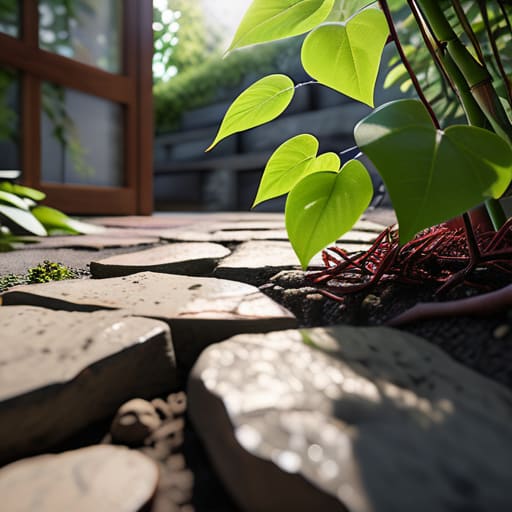
To wrap this up, remember that what you see above the ground is only half the story. Those bright green, heart-shaped leaves might look like nothing more than a bit of summer greenery, but if you’ve spotted those distinctive bamboo-like stems, you need to take it seriously. Between the rapid leaf growth and that relentless rhizome system lurking beneath your patio or driveway, this plant doesn’t play by the rules. I’ve seen far too many lovely Victorian terraces in this county lose value overnight because a homeowner waited just one season too long to act. If you suspect you have it, don’t try to be a hero with a garden spade; get a professional assessment before the roots find your foundations.
At the end of the day, a home is more than just bricks and mortar; it is the ground we stand on and the gardens we tend. While Japanese knotweed can feel like an overwhelming blow to your peace of mind, it isn’t the end of the road. If you catch it early and tackle it with the right expertise, you can protect your property and preserve your investment for the years to come. We look after our houses, and in return, they look after us. Just keep a sharp eye on your boundaries, stay proactive, and don’t let a bit of greenery undo all your hard work.
Frequently Asked Questions
If I find it in my garden, will it actually stop me from selling my house down the road?
The short answer is yes, it can. I’ve seen plenty of sales fall through in the valley because a surveyor spotted a bit of green near the boundary. Most lenders won’t touch a property unless there’s a professional management plan in place. It isn’t just about the plant; it’s about the paperwork. If you find it, don’t panic, but don’t ignore it either—if you leave it, you’re essentially tying your hands when it comes time to move.
Can I just dig it up myself with a spade, or am I asking for trouble?
I’ve seen many a well-meaning neighbour grab a spade and head out to the garden, thinking they can just dig the problem away. Don’t do it. In my thirty years of surveying, I’ve seen more damage caused by amateur attempts at removal than by the plant itself. If you leave even a tiny fragment of a rhizome in the soil, it’ll sprout back twice as strong. You aren’t just gardening; you’re spreading a structural hazard.
How much is this actually going to cost me to get rid of once it's taken hold?
Now, here is where the sting comes in. I’ve sat in living rooms where the homeowner thought they could just dig it out themselves on a Saturday morning; they can’t. Once it’s in your soil, you’re looking at professional treatment plans that can run anywhere from £500 to several thousand pounds, depending on the spread. It isn’t just the removal, though—it’s the specialist certificates you’ll need if you ever want to sell.