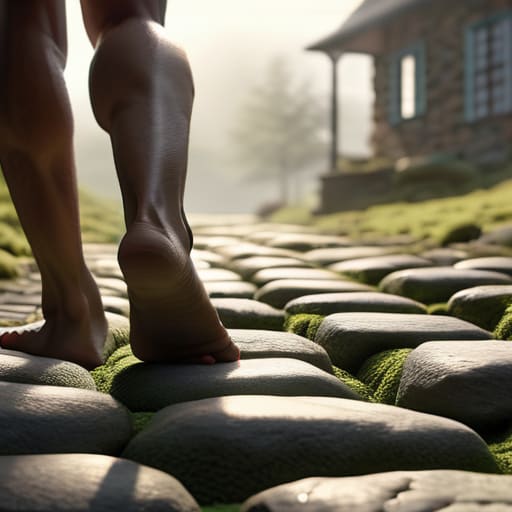
I was out near the old tithe barn last Tuesday—the one built around 1740, with the lovely flintwork that always seems to be shifting—when I caught myself doing a sort of frantic, uncoordinated jig just to stay upright on a patch of moss. It wasn’t a graceful movement; it was a sudden, jarring realization that my feet weren’t quite agreeing with my brain. You see all these glossy magazines claiming you need expensive gym memberships or high-tech sensors to figure out how to improve balance, but that’s a load of nonsense. Most of that stuff is just expensive distraction designed to separate a person from their pension.
I’m not interested in selling you a gadget or a complicated twelve-step regime that requires a change of clothes. What I want to do is share what actually works when you’re navigating real-world terrain, from slippery kitchen tiles to those uneven gravel paths we all seem to have in our gardens. I’ll be looking at the practical, everyday ways to steady yourself, focusing on simple, functional strength that you can do while the kettle is boiling. If I tell you a particular movement is worth your time, it’s because I’ve tried it myself on a properly uneven floor.
Table of Contents
Core Strength for Stability Building a Solid Foundation
You can’t build a decent dry stone wall on a patch of shifting mud, and you can’t expect your body to hold steady if your middle is as soft as a sponge. I’ve spent many a Saturday afternoon squinting at the foundations of old cottages—mostly mid-Victorian, though some of the older ones in the valley date back to the 1700s—and the principle is the same. If the base isn’t solid, the whole structure is a liability. In the same way, developing core strength for stability isn’t about lifting heavy weights like some lad in a gym; it’s about making sure the muscles around your spine can actually hold you upright when the ground gets uneven.
It isn’t just about brute force, either. It’s about the connection between your brain and your limbs. I find that incorporating simple neuromuscular coordination drills—even just standing on one leg while you wait for the kettle to boil—makes a world of difference. It teaches your body to react before you actually stumble. If you don’t train those small, stabilizing muscles, you’re essentially trying to balance a house on a foundation of sand.
Improving Equilibrium Naturally Through Daily Movement
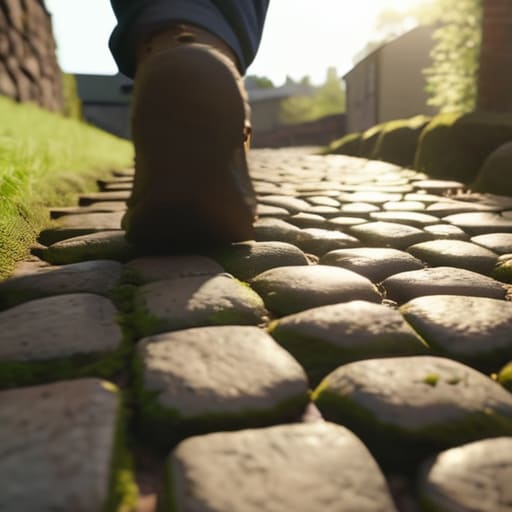
You don’t need a gym membership or fancy equipment to start improving equilibrium naturally; you just need to stop treating your daily errands like a chore and start treating them like a bit of training. I’ve noticed that most people walk through the village as if they’re on a flat, paved motorway, but our lanes are anything but. When I’m walking from the post office down towards the old mill—a path that’s been there since the mid-1800s, mind you—I make a point of paying attention to the uneven stones. Instead of looking at my feet, I try to keep my eyes up and feel how my ankles adjust to the slope. This is essentially a form of neuromuscular coordination drills performed while you’re simply heading to the shops.
It’s also about how you move when you’re doing the housework. If you’re reaching for a tin of beans on a high shelf or bending down to pick up a dropped pen, don’t just lurch. Slow it down. By focusing on the deliberate movement, you’re practicing proprioception exercises for seniors without even realising it. It’s about teaching your brain and your limbs to talk to each other more clearly, ensuring that when you do step off a curb, your body knows exactly where it is in space.
Five Small Ways to Keep Your Feet Under You
- Mind your footwear. I’ve seen plenty of folks trying to navigate a gravel path in those thin-soled trainers that offer about as much support as a wet biscuit. If you want to stay upright, you need a proper sole that actually grips the ground, especially when the cobbles get slick after a bit of rain.
- Use your eyes to steady yourself. When I’m up on a ladder checking a gutter—and believe me, I’ve spent more time on them than I should—I don’t look at my feet. I pick a fixed point at eye level. It stops that dizzy, floating feeling and gives your brain a reliable anchor.
- Don’t fear the kitchen counter. You don’t need a gymnasium to work on this; you just need a sturdy bit of granite or wood. While the kettle is boiling, try standing on one leg for a few seconds. Keep a hand near the counter, just in case, but don’t lean on it like a crutch unless you have to.
- Watch your step on the uneven bits. Most falls don’t happen on the pavement; they happen on the verge or the garden path where the frost has heaved the stones out of alignment. I’ve spent my weekends fixing dry stone walls, and I can tell you, a single loose rock is all it takes to send you sideways.
- Keep your head up. It sounds simple, but most people spend their lives staring at their toes or a mobile phone. If you’re looking down, you aren’t seeing the trip hazard or the change in gradient coming your way. Keep your chin up and look where you’re actually going.
A Few Things to Keep in Mind
Don’t wait for a stumble to take it seriously; much like checking the pointing on a garden wall, it’s easier to maintain your stability now than to repair the damage after a fall.
Keep your feet moving in ways that actually matter, whether that’s a brisk walk down to the village shop or just making sure you aren’t sitting in the same armchair from breakfast until tea.
Listen to your body when it tells you things are feeling a bit off, because once you lose that sense of sure-footedness, getting it back takes a lot more effort than simply staying steady in the first place.
The Ground Beneath Your Feet
I’ve spent thirty years walking through drafty cottages and over uneven garden paths, and I’ve learned that you can’t expect a house to stand straight if the foundations are shifting; it’s the same with us. You don’t find your balance by standing perfectly still, but by strengthening the bits of you that keep you upright when the ground decides to be difficult.
Gordon Ellery
A Steady Footing for the Long Run
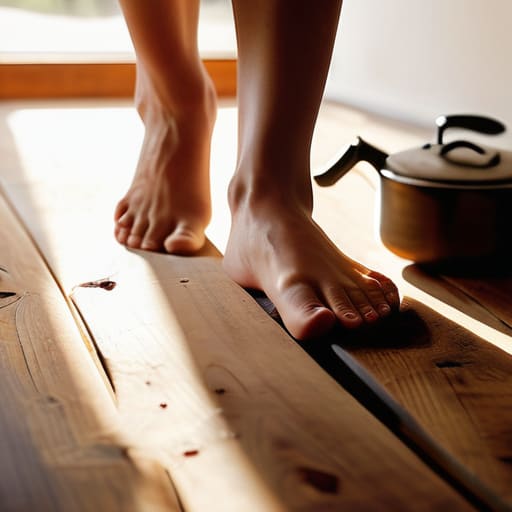
To wrap this up, we have looked at how much of your stability actually comes down to the basics: keeping your core engaged and making sure you aren’t sitting in that armchair from 1984 for eighteen hours a day. It isn’t about training for a marathon or joining a fancy gym in the city; it is about the small, consistent things, like standing on one leg while the kettle boils or making sure you take the long way round the village green. If you focus on strengthening that foundation and keeping your joints moving, you will find that the world feels a little less like a tilting deck. It is about building resilience into your daily routine so that when you do hit a patch of uneven paving or a bit of loose gravel, your body knows exactly how to react.
I spent thirty years looking at the structural integrity of buildings, and I can tell you that the most solid structures aren’t the ones that are the stiffest, but the ones that can handle a bit of movement without cracking. People are much the same. Don’t be too hard on yourself if you wobble a bit today; even the best-built cottages settle into their foundations over time. The important thing is that you keep moving forward and don’t let a bit of clumsiness stop you from getting out there. Just keep your eyes up, your core steady, and take it one step at a time. I’ll see you down at the post office.
Frequently Asked Questions
Is it safe to try these balance exercises if I’ve already had a fall or if my ankles feel particularly dodgy?
Now, listen to me on this. If you’ve already had a tumble, or if those ankles of yours are feeling particularly dodgy—perhaps a bit of a strain from walking that uneven path down by the mill—you must be cautious. Don’t go playing the hero. I’d suggest you have a quick word with your GP first. It’s better to get a professional nod before you start testing your footing on anything more strenuous than the kitchen rug.
How much time do I actually need to set aside each day to see a difference, or is it enough just to do a bit while the kettle's boiling?
Now, don’t go thinking you need an hour in a gym to see a change. I’ve spent enough time navigating slippery, moss-covered paths near the old mill to know that consistency beats intensity every time. If you can manage ten minutes of focused movement while the kettle’s boiling, you’re already ahead of most. It’s about those small, daily bits of work—the kind that builds up, much like a well-laid dry stone wall.
Should I be looking into specific footwear for my daily walks, or is it better to practice in my bare feet to get a better feel for the ground?
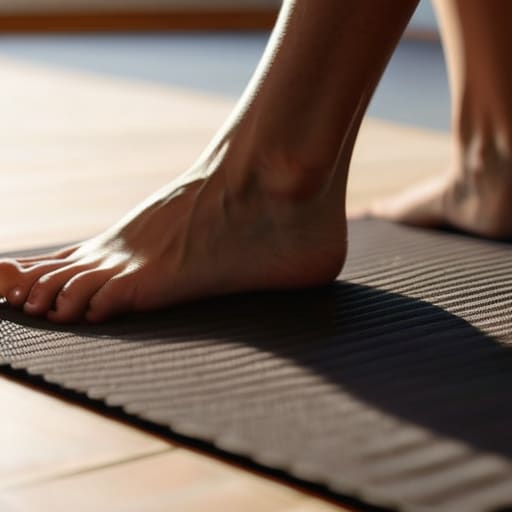
Now, I’ve spent plenty of time navigating the uneven flint paths around the village, and there’s a fine line between feeling the ground and tripping over it. If you’re walking on the gravel track by the old mill, you’ll want a decent, supportive shoe to protect your joints. However, for a bit of training at home, going barefoot on a flat rug is excellent for waking up those little muscles in your feet. Just don’t go wandering the lanes in your socks.