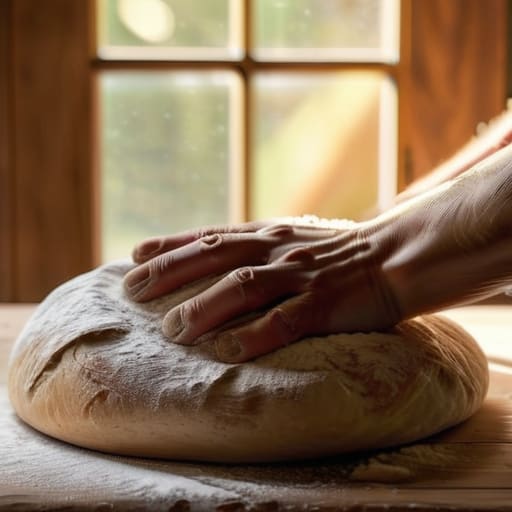
I saw a advert in the local paper last week for one of those fancy, computerized bread makers—the sort that costs more than a decent set of masonry tools and promises to do all the thinking for you. Honestly, it’s a bit of a nonsense. People seem to think you need a gadget with a digital display just to get a decent crust, but I’ve always found that the more buttons you add, the less soul you get in the loaf. If you’re looking for how to make bread without a machine, you don’t need a silicon chip; you just need a bit of patience and a clean countertop.
I’m not going to bore you with complicated French techniques or lists of ingredients you can’t find at the village shop. Instead, I’ll show you the straightforward, honest way to knead a dough by hand that won’t leave your arms feeling like they’ve been through a hedge backwards. I’ve spent enough time in my own kitchen to know which mistakes lead to a brick and which ones lead to a perfect, golden slice. I promise to give you a method that works, even if your hands aren’t particularly skilled.
Table of Contents
- The Honest Truth About the Yeast Fermentation Process
- Finding Your Rhythm With Manual Dough Kneading Techniques
- Five things I’ve learned from a lifetime of flour and patience
- A few bits to remember before you start
- The value of a bit of elbow grease
- A bit of patience and a floury bench
- Frequently Asked Questions
The Honest Truth About the Yeast Fermentation Process
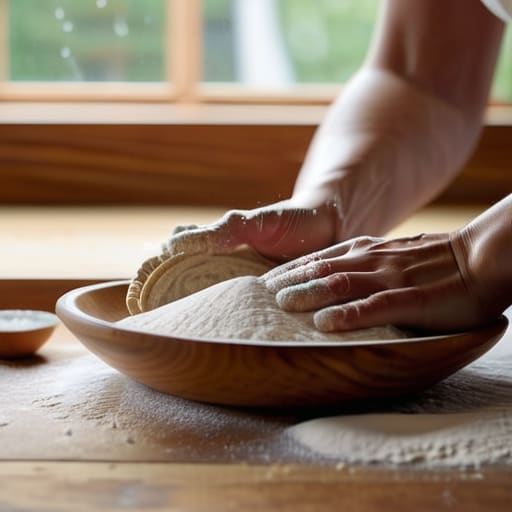
Now, I’m not one for the scientific jargon you’ll find in those glossy cookbooks, but if you want a loaf that isn’t a brick, you have to respect the yeast fermentation process. It isn’t magic; it’s just biology. When you mix your flour and water, you’re essentially waking up tiny living things that want to eat. In a machine, they get rushed, shoved into a heated chamber and forced to perform. When you do it by hand, you’re working with the rhythm of the room. If it’s a damp Tuesday in Hampshire, they might move a bit slower than on a dry, warm afternoon in July.
You can’t rush the rise time for homemade bread, no matter how much of a hurry you’re in to get to the pub. If you try to bake it before the dough has properly doubled, you’ll end up with a heavy, dense crumb that’ll sit in your stomach like a stone. Patience is the most essential bread making tool you own, and it doesn’t cost a penny at the local hardware shop. Just give it the time it asks for.
Finding Your Rhythm With Manual Dough Kneading Techniques
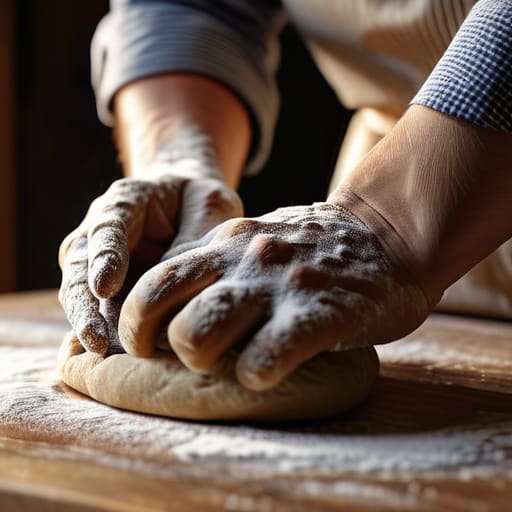
Once you’ve let the yeast do its initial work, you’ll find yourself standing over a floured worktop, and this is where the real character of the loaf is built. I’ve always found that manual dough kneading techniques aren’t about brute strength; it’s more like working a piece of stubborn clay. You use the heel of your hand to push the dough away from you, fold it back, and turn it. It’s a rhythmic, steady business. If you try to rush it, you’ll end up with a heavy, dense brick that’ll sit in your stomach like a stone.
Don’t worry if your first few attempts feel a bit clumsy—I certainly struggled when I first started, much like my attempts at those dry stone walls in the back meadow. The key is to watch the texture rather than the clock. You are looking for the dough to transform from a shaggy, sticky mess into something smooth and elastic. Once it springs back when you poke it with a finger, you’ve found your rhythm. It’s a tactile sort of satisfaction that no plastic gadget can ever quite replicate.
Five things I’ve learned from a lifetime of flour and patience
- Don’t rush the rise; if the kitchen is draughty like the hallway in the old rectory, you’ll need to tuck your bowl inside the oven with just the light on.
- Watch your hands, not the clock, because the dough tells you when it’s ready by feeling springy rather than just following a timer.
- Use a scale rather than a measuring jug if you can, as even a slight extra splash of water can turn a lovely dough into something resembling mortar.
- Invest in a decent heavy-bottomed pot for the bake; it holds the heat much better than a standard tin and gives you a crust that actually has some character.
- Clean your workspace as you go, because once that flour gets sticky and dries on the worktop, you’ll be scrubbing until next Tuesday.
A few bits to remember before you start
Don’t go looking for perfection; a bit of an uneven crust is just proof that a human, not a motor, made it.
Patience is your main ingredient, so if the dough isn’t rising by the time you’ve finished your tea, leave it be and try again later.
Keep your workspace clear and your hands warm, as a cold kitchen is the quickest way to kill a batch of dough before it’s even begun.
The value of a bit of elbow grease
A bread machine is just a box that follows a timer, but when you’re working the dough yourself, you actually learn what it needs; you feel when it’s gone from a sticky mess to something with real structure, much like trying to set a dry stone wall—it takes patience, a bit of grit, and knowing when to stop pushing.
Gordon Ellery
A bit of patience and a floury bench
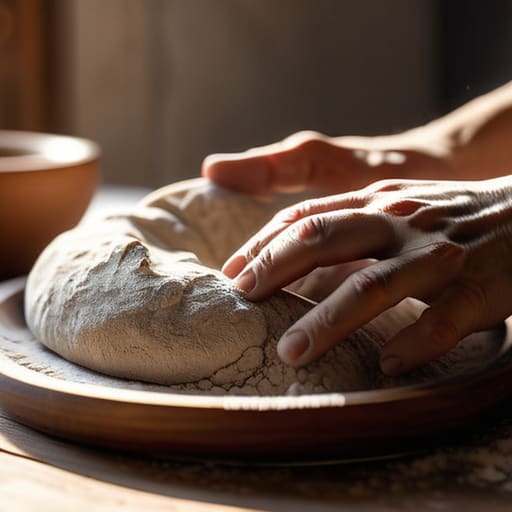
At the end of the day, you’ve seen that making bread by hand isn’t about following a strict blueprint like a surveyor’s plan; it’s about understanding the materials. You’ve learned that the yeast needs its time to breathe, and that your own hands are far better at feeling the tension in a dough than any plastic paddle in a machine could ever be. If you’ve managed to get the kneading down to a rhythm—and if you didn’t end up with more flour on the floor than in the bowl—you’ve done the hard part. It comes down to respecting the process and knowing that patience is the most important ingredient in your pantry.
I remember my first proper loaf back in the late seventies; it was a bit lopsided and the crust was harder than a flint, but the smell of it coming out of the oven was something else entirely. There is a quiet sort of satisfaction in knowing exactly what went into your food, from the grain to the salt. Don’t worry if your first few attempts aren’t quite up to the standard of the village bake-off. Just keep your hands in the flour and keep at it. There is a genuine sense of accomplishment in feeding yourself something real, and I promise you, nothing beats the taste of a warm slice straight from your own kitchen.
Frequently Asked Questions
If I don't have a stand mixer, how much of my actual arm strength is going to be gone by the end of the kneading?
Now, don’t go thinking you’ll need to enlist a professional masseuse by the time you’re done. If you use the heel of your hand and a steady rhythm, it’s more about patience than raw power. I’ve spent many a Saturday wrestling with stubborn stone, so I know a bit about exertion. Your forearms might feel a bit heavy, and you’ll certainly feel the warmth in your shoulders, but it’s a good, honest ache.
What’s the best way to tell if the dough has actually risen enough without having a digital display telling me it's done?
You don’t need a sensor for this; you just need a bit of patience and a clean finger. I call it the “poke test.” Gently press your finger about an inch into the dough. If it springs back quickly, it’s still fighting you—it needs more time. If it stays indented like a footprint in a muddy lane, it’s gone too far. You’re looking for that slow, lazy spring that tells you it’s ready.
Can I get away with using a standard glass bowl, or do I need something specific to keep the heat in while it sits on the counter?
A standard glass bowl is perfectly fine, though I’d steer clear of anything too shallow. You want depth to prevent a skin forming on the top. If your kitchen is drafty—like mine gets when the wind whips off the downs—just wrap the bowl in a clean tea towel. It’s not about high-tech insulation; it’s just about keeping the temperature steady while that yeast does its work. A bit of warmth goes a long way.