
I was standing by the old stone bridge near the mill—the one built in 1842, mind you, though the foundations are much older—waiting for the 10:15 that was supposed to take me into Salisbury. The rain was doing that fine, soaking thing that gets right under your collar, and as I watched the empty road, I realized that most people talking about rural bus services explained in the local papers are talking about spreadsheets and subsidies, not the actual reality of standing in a puddle. They treat connectivity like a math problem, but for those of us living beyond the reach of the main A-roads, it’s a matter of whether or not you can actually get to the chemist without a car.
I’m not here to give you a lecture on transport economics or recite government white papers. What I intend to do is give you the view from the roadside. I’ll be looking at how these routes actually function, which ones are worth the fare, and why the “service” often feels more like a suggestion than a schedule. This is straight talk based on years of watching the timetables fail and succeed, so you know exactly what you’re getting into before you leave the house.
Table of Contents
The Real Impact of Bus Service Reductions
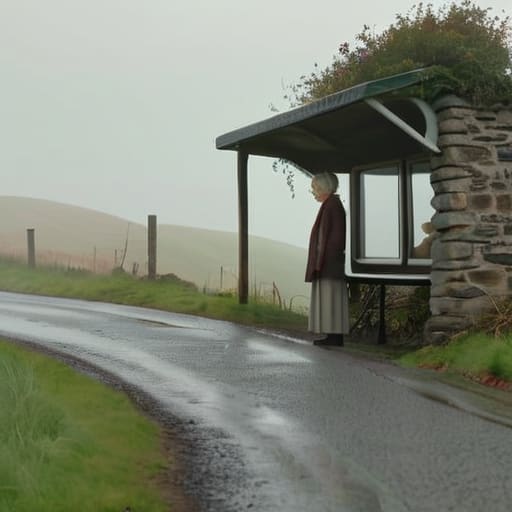
It isn’t just about the inconvenience of a longer wait at the stop near the old smithy; it’s about the slow erosion of independence. I spoke to Mrs. Higgins last Tuesday—she’s lived in the cottage by the bend since 1964—and she told me she’s stopped going to the chemist in the village because the midday service was cut. When we talk about the impact of bus service reductions, we aren’t discussing abstract statistics. We are talking about the person who can no longer get to a GP appointment without begging a neighbour for a lift.
For the younger crowd, it means being stuck. If you don’t have a car and the local route only runs twice a day, you’re effectively a prisoner in your own parish. We see these rural connectivity challenges play out every time a school term begins or a local shop closes its doors. Without a reliable link, the very fabric of our community begins to fray. We need more than just empty promises; we need on-demand rural transit solutions that actually recognise the way we live, rather than forcing us to fit into a timetable designed for a city.
Public Transport Accessibility in Remote Areas
When I look at the map of our parish, I don’t see lines on a page; I see the steep incline of Miller’s Lane and the way the mist settles in the valley bottom near the old mill (built, mind you, around 1840). For someone without a car, those distances are deceptive. We talk a lot about public transport accessibility in remote areas, but for the elderly resident living three miles from the nearest post office, it isn’t a theoretical concept. It is the difference between getting a fresh loaf of bread or staying stuck at home.
The current rural connectivity challenges often stem from the fact that a standard double-decker is a dinosaur in a village with single-track lanes and stone walls that haven’t budged since the Tudors. We need to stop trying to force big-city solutions onto small-village problems. I’ve been hearing more about on-demand rural transit solutions—smaller, flexible vehicles that respond to a call rather than following a rigid, often empty, timetable. It’s about making sure the transport fits the landscape, rather than expecting the landscape to change for the bus.
A Few Practical Bits for Navigating the Timetable
- Keep a printed copy of the schedule in your hallway; I’ve found that relying on a smartphone is a mistake when you’re standing at a stop near the old mill and the signal decides to vanish entirely.
- Watch the service numbers closely, as the 42 and the 42B might look similar on a map, but one actually makes the turn for the village hall while the other bypasses us completely.
- If you are planning to use the service for a doctor’s appointment, aim to arrive at the stop twenty minutes early; I’ve learned the hard way that a “reliable” service can still be held up by a tractor on the B3344.
- Check the local parish noticeboard or my own site before you set off, as many of the smaller operators don’t bother updating their websites when a driver calls in sick or a route is diverted.
- Get to know the drivers if you can; they are often the best source of real-time information, and they’ll usually tell you straight if the 10:15 is running behind due to the roadworks near the bridge.
What We Must Remember
A village without a reliable bus service isn’t just a bit inconvenient; it becomes a trap for anyone without a car, from the teenager heading to college to the pensioner trying to get to a GP appointment in Salisbury.
We need to stop looking at bus routes as mere lines on a council map and start seeing them as the lifelines that keep our local shops and post offices from closing their doors for good.
Real connectivity isn’t about having a fancy high-speed rail link in the next town over; it’s about whether the 8:15 service actually pulls up at the stop when the rain is coming down.
## More Than Just a Timetable
“You can look at a map and see a line connecting two villages, but a bus service isn’t just a line on a page; it’s the difference between an elderly neighbour getting to the chemist on a Tuesday or being stuck in the house until someone happens to drive past.”
Gordon Ellery
A Final Word on the Road Ahead
We have looked at the numbers and the maps, but at the end of the day, it comes down to the practicalities of living in a place like this. Whether it is the loss of a midday service that leaves the elderly stranded or the way a lack of connectivity makes it harder for young people to find work in the larger towns, the impact is felt in every corner of our community. We cannot simply accept that reduced timetables are an inevitability of modern life. If we lose the links that connect our lanes to the wider world, we risk turning our vibrant villages into little more than collections of houses, disconnected and increasingly isolated from the services we all rely upon.
I have spent thirty years looking at the foundations of buildings, and I know that if the base is weak, the whole structure eventually suffers. Our transport network is no different; it is the essential infrastructure of social connection. As we look toward the next parish council meeting or the next local election, let us remember that fighting for a reliable bus service is not just about transport—it is about fighting for the very soul of our village life. We must ensure that the next generation can stay, and our older neighbours can thrive, in a community that actually stays connected to the world outside its own borders.
Frequently Asked Questions
If the council cuts the service again, are there any community-led schemes or dial-a-ride options we can actually rely on?
Now, I’ve seen the council’s spreadsheets, and they don’t account for the human cost. If the cuts come, we look to the community. We’ve got the village minibus scheme—it’s run by volunteers, and while it isn’t a scheduled service, it gets you to the surgery or the Co-op. There’s also the dial-a-ride, though you must book well in advance. It’s not as seamless as the old routes, but it works if you talk to your neighbours.
How much is the lack of a decent bus timetable actually affecting the property values of the houses further down the lanes?
It’s a subtle thing, but it’s there. When I was valuing properties in the late nineties, a village connection was a bonus; now, it’s a baseline. If you’re tucked away down a lane where the bus only runs twice a Tuesday, you’ve shrunk your buyer pool to people with two cars and a full tank of petrol. It doesn’t crash the price overnight, but it certainly caps the ceiling for anyone looking to downsize.
Is there any way for us to get more information on the planned changes before the routes are officially scrapped?
It’s a frustrating position to be in, feeling like the decisions are made behind closed doors. Your best bet is to keep a sharp eye on the County Council’s consultation portal; they are legally required to post notice of proposed changes there. I also suggest attending the next Parish Council meeting at the village hall—usually the first Tuesday of the month. It’s much harder for them to ignore a room full of actual residents.