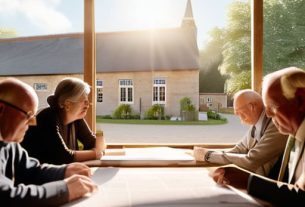
I was sitting in the village hall last Tuesday, watching a young man from the district council try to explain that setting up a local collective required a three-year strategic plan and a formal committee structure. It was nonsense, plain and simple. If you’re sitting there wondering how to start a community group just because you’re tired of the potholes on Mill Lane or want a bit of life back in the pub, you don’t need a consultant or a leather-bound handbook. You just need a few people who actually show up and a shared sense of purpose. Most of the advice out there is far too focused on the paperwork and not nearly enough on the people involved.
I’m not going to bore you with jargon or tell you that you need a dedicated website and a fundraising gala to make a difference. My approach is a bit more practical, born from thirty years of seeing what actually sticks in a village and what withers away by the next parish meeting. I’ll show you how to find your core team, how to keep things moving without it becoming a second job, and how to ensure your group actually serves the neighbours instead of just creating more meetings.
Table of Contents
- Drafting a Community Group Mission Statement That Actually Means Something
- Finding Community Group Members Beyond the Digital Echo Chamber
- Five Ways to Keep the Momentum from Fading Before the First Meeting
- Things to Keep in Mind Before You Get Started
- The Real Foundation of Any Group
- A Final Word Before You Get Stuck In
- Frequently Asked Questions
Drafting a Community Group Mission Statement That Actually Means Something

When I sat on the parish council back in ’98, I saw plenty of people waste months chasing shadows because they hadn’t sat down to write a proper community group mission statement. You don’t need a three-page manifesto filled with lofty, academic jargon that no one actually reads. If you want to get people behind you, you need to be blunt. Are you fixing the broken swings at the village green, or are you just a group of people who enjoy a monthly biscuit and a moan about the potholes? Decide that first.
A good mission statement acts like a sturdy foundation on a cottage built in the 1920s; if it’s wonky, the whole structure will eventually crack. It should tell a newcomer exactly what you do and, more importantly, what you don’t do. This clarity is vital when you start finding community group members who actually have the time and inclination to help. If your aim is clear, you won’t end up with twenty people showing up to a meeting only to realise they’ve signed up for a gardening club when they actually wanted to talk about road safety.
Finding Community Group Members Beyond the Digital Echo Chamber

Now, don’t go thinking you can build a proper group just by posting a flyer on the village Facebook page. I’ve seen plenty of digital enthusiasm vanish the moment someone actually has to show up on a Tuesday evening. If you want to succeed at finding community group members who will actually stick around, you have to get out from behind the screen. I always tell people to start at the post office or the pub. It’s in those brief, face-to-face chats—while you’re waiting for your change or a pint—that you find the people who truly care about whether the village hall roof stays watertight.
You might find that the most useful people aren’t the ones shouting the loudest online, but the ones who have been living here for forty years and know exactly which lanes flood in November. Organizing local community meetings in a physical space, like the church hall or even someone’s kitchen, does more for building trust than any WhatsApp thread ever could. It’s about the handshake and the eye contact. When you meet people in the flesh, you aren’t just collecting names for a list; you are building a foundation of real, reliable neighbours.
Five Ways to Keep the Momentum from Fading Before the First Meeting
- Don’t try to solve everything at once. If you start out trying to fix the potholes, the school curriculum, and the village hall roof in a single afternoon, you’ll burn out by Tuesday. Pick one small, visible thing—like getting a bench repaired or organizing a summer fete—to prove to people that showing up actually achieves something.
- Keep your meetings short and focused. I’ve sat through enough parish council sessions to know that once you hit the ninety-minute mark, people start looking at their watches and thinking about their tea. If you have an agenda, stick to it, and if you don’t, don’t wander off into discussing the price of diesel.
- Remember that the best people aren’t always the loudest. In every village, there’s someone who knows exactly how the drainage works or who has the keys to the community hall, but they won’t be shouting on a Facebook group. You have to go to them—usually at the post office or the pub—and ask them properly.
- Sort out the money early, even if it’s just a small amount. You don’t need a complex accounting system for a group of six people, but you do need a clear way to show that every penny spent on tea and biscuits is accounted for. Transparency is the only way to keep the skeptics from grumbling.
- Assign roles that actually matter. You don’t need a Chairperson, a Secretary, and a Treasurer for a group of four people, but you do need someone to keep track of the dates and someone to send the emails. If everyone is responsible for everything, then in reality, no one is responsible for anything.
Things to Keep in Mind Before You Get Started
Don’t get bogged down in the fine print of a constitution before you’ve even had a cup of tea with three people who agree with you; focus on the actual purpose first.
If you’re only recruiting through Facebook, you’ll miss the very people who make the village run—the ones who actually notice when the streetlights are out or the church roof needs pointing.
Aim for a group that solves a specific, local problem, like fixing the broken bench by the duck pond, rather than trying to change the whole world from a drafty village hall.
The Real Foundation of Any Group
You don’t build a community group by sitting in a drafty village hall with a stack of printed agendas; you build it by noticing that the hedge on the corner is overgrown or that the post office is closing, and then finding the three people on your street who feel exactly the same way.
Gordon Ellery
A Final Word Before You Get Stuck In

At the end of the day, starting a group isn’t about having a perfectly polished mission statement or a massive following on a social media app that half the village doesn’t even use. It is about the practicalities we have discussed: knowing exactly why you are gathering, whether that is to fix the broken bench by the duck pond or to ensure the village hall doesn’t sit empty on Tuesday nights. You don’t need a committee of twenty to begin; you just need a few reliable people who are willing to show up and actually do the work. If you have a clear purpose and you’ve taken the time to talk to your neighbours face-to-face, you have already done the hardest part of the job.
I have spent thirty years looking at the bones of houses, from the flint cottages built in the 1840s to the newer builds on the edge of the valley, and I have learned that a building is only as strong as its foundation. A community is much the same. It isn’t built by grand gestures or expensive marketing; it is built through the small, steady acts of people deciding to care about the street they live on. So, don’t wait for a formal invitation or a perfect moment to arrive. Just pick up the kettle, knock on a few doors, and start building something that makes this place feel like home.
Frequently Asked Questions
Do we actually need to register as a formal charity, or can we just keep things informal with a few tea meetings at the village hall?
Look, if it’s just a few of us meeting in the village hall on a Tuesday to discuss the flower show, there’s no need for the Charity Commission. Keep it informal. But the moment you start collecting significant sums of money or renting a dedicated space, you’ll want a proper structure—perhaps a small unincorporated association. It keeps the liability off your own doorstep. For now, stick to the tea and biscuits; don’t overcomplicate things.
How do we handle it when two or three people start arguing over the direction of the group and nobody wants to budge?
Look, I’ve sat through enough parish council meetings to know that when three people start digging their heels in, the whole project stalls. It usually happens because everyone is passionate, which isn’t a bad thing, but passion without a compass is just noise. My advice? Go back to that mission statement we talked about. If a suggestion doesn’t serve the core purpose, it doesn’t matter how loudly it’s argued. Keep it focused on the village, not the ego.
Where on earth are we going to find a little bit of funding for things like hall hire or basic equipment without it becoming a full-time job?
Now, don’t go thinking you need a professional accountant to find a few quid for the village hall hire. Start small. Check if the parish council has a tiny pot of discretionary funding for community projects—I’ve seen them hand out a few hundred pounds for exactly this. Local businesses, like the butcher or the hardware shop, might chip in ten pounds a month if you mention it. It’s about small, steady help, not a massive grant application.