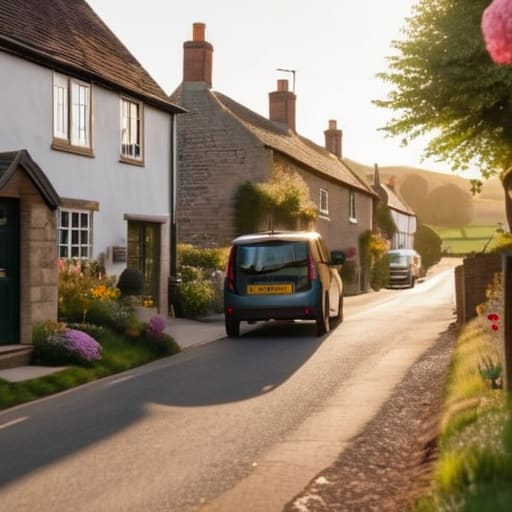
I was standing at the bus stop outside the village hall last Tuesday—the one built in 1894, mind you, which has seen better days—watching a young man stare blankly at a smartphone app. He looked utterly defeated because some glossy brochure had told him that the only way to manage a community commute was through a high-tech, subscription-based platform. That is absolute nonsense. If you want to learn how to set up a lift share scheme that actually survives more than a fortnight, you don’t need a software developer; you need a clipboard and a bit of common sense.
I’ve spent thirty years valuing properties and sitting through enough parish council meetings to know that people don’t want complicated algorithms; they want to know they won’t be left standing on a cold kerb at 7:15 AM. In this guide, I’m going to skip the tech-heavy jargon and tell you how to build something that works using nothing more than a bit of local trust and a shared WhatsApp group. I’ll show you how to get your neighbours moving without making it feel like a second job, focusing on the practicalities that actually keep a car on the road and a person on time.
Table of Contents
- Solving Carpooling Logistics and Management Without the Headache
- Securing Community Transport Funding Options for Your Neighborhood
- Five Bits of Practical Advice Before You Start the Engine
- A Few Things to Remember Before You Start the Engine
- More Than Just a Full Tank
- A Final Word on Getting Moving
- Frequently Asked Questions
Solving Carpooling Logistics and Management Without the Headache

Now, I know what you’re thinking. You’ve got the spirit, you’ve got the neighbours, but the moment you try to coordinate three different school runs and a commute to Salisbury, the whole thing feels like trying to hold water in a sieve. The real trick to carpooling logistics and management isn’t about fancy apps that cost a fortune; it’s about a simple, shared spreadsheet or even just a reliable WhatsApp group that everyone actually checks. You need a system where people know exactly who is picking them up at 8:15 am, rather than a flurry of frantic texts while someone is trying to navigate a narrow lane.
You also can’t ignore the “what ifs.” I’ve seen well-meaning schemes stumble because someone didn’t check their volunteer driver insurance requirements before the first trip. It sounds dry, I know, but it’s better to have that conversation over a cup of tea now than to be left stranded by a broker later. If you’re looking to keep things official, it’s worth asking the Parish Council about community transport funding options to help cover the cost of signage or even a small pot for petrol. It’s about building something that lasts, not just a temporary fix that falls apart after the first rainy Tuesday.
Securing Community Transport Funding Options for Your Neighborhood

Now, once you’ve sorted the logistics, you’ll likely find that the biggest hurdle isn’t the people, but the pennies. Most of us are used to paying for things out of our own pockets, but if you’re looking to scale up from a few neighbours sharing a trip to the supermarket to something more formal, you’ll need to look into community transport funding options. I’ve seen several parish councils successfully apply for small grants to help with signage or even a shared minibus. It isn’t about building a commercial empire; it’s about finding enough support to make the service reliable so people don’t feel like they are subsidising a hobby.
You also cannot ignore the boring, legal side of things—and believe me, I’ve sat through enough committee meetings to know it’s vital. If you are moving beyond a casual chat over a garden fence, you must address volunteer driver insurance requirements. It’s a bit of a headache, I grant you, but it’s the difference between a helpful gesture and a legal nightmare if someone trips on a wet footstep. It is far better to spend an afternoon sorting the paperwork now than to be left staring at a claim later.
Five Bits of Practical Advice Before You Start the Engine
- Start with the people you actually know. I’ve seen too many schemes fall apart because they tried to recruit strangers from the next village over. Stick to the folks on your street or the parents at the school gate; if you know someone’s reliable enough to return a borrowed spade, they’re likely reliable enough to show up at 8:15 AM.
- Get a simple way to track the pennies. Don’t make it complicated with spreadsheets and fancy apps that half the village won’t be able to navigate on their phones. A shared notebook or a basic WhatsApp group where everyone agrees on a weekly “petrol pot” is usually enough to keep the peace and ensure no one is subsidising someone else’s commute.
- Map out the actual routes, not the shortest ones. I spent years looking at site plans, and I can tell you that the “quick way” through the valley is a nightmare when the frost hits or the tractor is out in the lane. Plan your pick-up points based on where it’s easy to pull over without blocking a narrow bend or a farmer’s gate.
- Have a clear “out” clause. Life happens—cars break down, kids get sick, or someone simply decides they’d rather drive alone for a bit. Make it clear from day one that if someone can’t make a lift, they just need to give twenty minutes’ notice. It’s about being neighbours, not being in a legal contract.
- Check the insurance, and don’t skip this bit. It’s a common mistake, but you need to make sure your car insurance covers “social, domestic and pleasure” use for carpooling, or whatever specific wording your provider requires. It’s much better to spend ten minutes on the phone to your broker now than to be left stranded if there’s a bump in the road.
A Few Things to Remember Before You Start the Engine
Don’t overcomplicate the paperwork; a simple WhatsApp group or a shared notebook in the village hall is often more reliable than some fancy app that nobody can be bothered to download.
Real success comes from trust, so start small with people you actually know—the sort of people who wouldn’t dream of leaving you idling at the junction of the B3343.
Keep the conversation going even when the scheme is running smoothly, because a lift share only works if people remember they are part of a community, not just passengers in a car.
More Than Just a Full Tank
A lift share scheme isn’t some complex logistical puzzle to be solved with an app; it’s simply about making sure you aren’t left standing on a cold kerb at seven in the morning waiting for a car that never shows up.
Gordon Ellery
A Final Word on Getting Moving
To pull this off, you don’t need a complicated spreadsheet or a degree in logistics; you just need a bit of common sense and a clear way to manage the petrol money. We have looked at how to sort out the practicalities of who drives when, how to keep the communication lines open without everyone’s phone buzzing at midnight, and where to look for those small pots of local funding that can get a scheme off the ground. It is about finding that balance between reliable schedules and the flexibility that a village actually requires. If you can get the management side right—even if it is just a simple WhatsApp group or a notice on the pub door—you have already done the hardest bit of the heavy lifting.
At the end of the day, a lift share scheme is about much more than just cutting down on the number of cars idling at the junction near the old mill. It is about the small, quiet ways we look out for one another. It is about the young person getting to their apprenticeship on time and the retiree not feeling stranded because the bus service has been cut back again. When we share a seat, we are rebuilding the social fabric of our streets, one journey at a time. It might start with just two neighbours heading towards Salisbury at the same time, but it can quickly become the thing that keeps a community feeling like a home.
Frequently Asked Questions
What happens if someone misses their slot or turns up late and throws the whole morning schedule into a tailspin?
It’s the one thing that keeps me up at night, quite frankly. You have one person running ten minutes late at the bottom of Mill Lane, and suddenly the whole morning is a mess. The trick isn’t to be a drill sergeant, but to have a simple “grace period” rule. I suggest a quick WhatsApp group where people must flag a delay at least fifteen minutes prior. It’s about courtesy, not policing.
How do we handle the actual money—is it better to use an app or just keep a running tally in a notebook at the village shop?
Now, regarding the money—this is where things often go sideways. I’ve seen too many good intentions sour because of a misplaced tenner. While everyone loves a sleek app, they can be a bit fiddly for some, and frankly, they lack accountability. I’d stick to a simple running tally kept in a secure spot, like the ledger at the village shop. It’s transparent, everyone sees it, and it keeps the maths plain and simple.
What's the best way to make sure everyone feels safe getting into a neighbour's car, especially if we don't all know each other that well yet?
It comes down to trust, and trust isn’t built overnight. I’ve found that starting with a “meet and greet” at the village hall—or even just a coffee at the local shop—does wonders. It’s much harder to feel uneasy about a ride when you’ve actually shaken someone’s hand. We should also keep a simple, printed list of names and numbers in the village newsletter so everyone knows exactly who is behind the wheel.